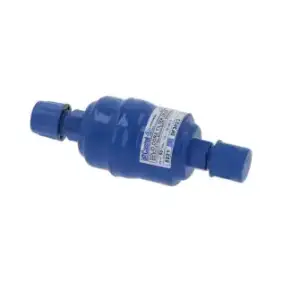
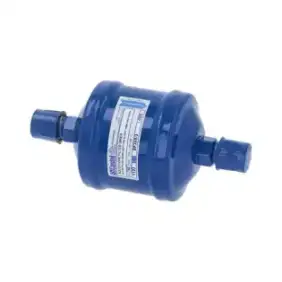
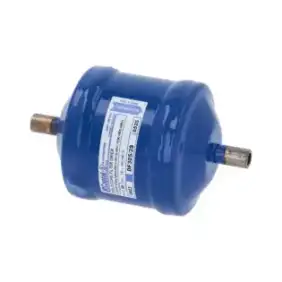
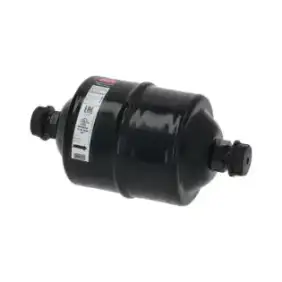
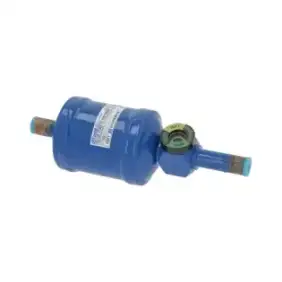
How to select the correct filter drier
The component or manufacturer reference is usually the most reliable starting point. Products within the same general filter family can use different connection standards, inlet and outlet dimensions, port configurations and filter capacities.
A practical selection order is:
- Manufacturer or component reference – use the original reference or a confirmed cross-reference where available.
- Filter construction – identify whether you need a copper inline filter, dehydrator or anti-acid filter, filter with integrated humidity indicator or replacement cartridge.
- Exact series or type – components from the same manufacturer can use different technical interfaces.
- Port configuration – distinguish a standard inlet/outlet filter from a 3-way or other multi-port design.
- Connection standard – check SAE, ODS, metric tube connection or another specified system.
- Inlet size – verify every inlet separately on multi-port filters.
- Outlet size – do not assume that inlet and outlet use the same diameter.
- Capacity or core specification – compare grams, cm³ or another stated value within the correct filter construction.
- System specifications – verify refrigerant, pressure, temperature or other operating data when explicitly stated.
- Physical dimensions – use body diameter and overall length as additional confirmation, not as the only fit criteria.
- Application – check machine or system compatibility where Brooks Parts lists a specific application.
- Origin – distinguish OEM/original parts from compatible non-original replacements where applicable.
Copper refrigeration filters
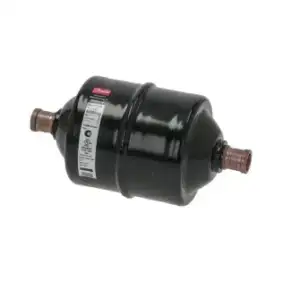
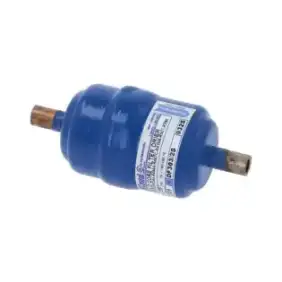
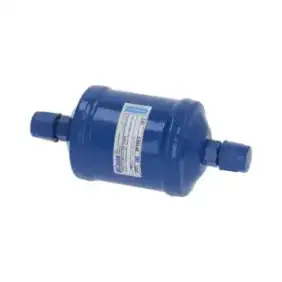
Compact copper filters are available with different capacities, tube connections and port layouts. Capacity alone does not identify the correct filter.
For example, the Dena SM230S309_6,5/2,6 30 g copper filter uses a 6.5 mm inlet and 2.6 mm outlet. Other copper filters in the same category use different inlet/outlet combinations even when the nominal filter capacity is similar.
This means that 30 g does not equal one universal connection configuration. Verify capacity together with inlet, outlet, number of ports and the component reference.
2-way and 3-way filter configurations
Not all copper filters use a simple one-inlet/one-outlet layout. Some products use a 3-way construction with two inlets and one outlet.
The 10 g 3-way copper filter Ø16 × 113 mm uses two different inlet connections and a separate outlet. This configuration should not be treated as interchangeable with a standard 2-port filter of similar capacity or body dimensions.
For multi-port filters, compare number of ports → each inlet size → outlet size → body specification → application.
SAE, ODS and metric connections
Filter driers can use different refrigeration connection systems. A nominal size by itself is not enough to identify the interface.
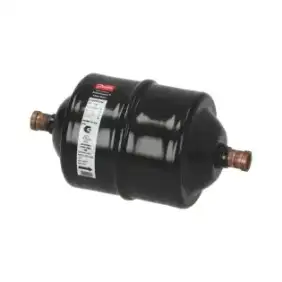
For example, the DCL 052S dehydrator filter uses a 1/4″ ODS connection. Other filters can use SAE flare connections or metric tube dimensions.
Always verify the complete connection specification: connection standard → nominal size → inlet/outlet configuration. A 1/4″ SAE connection and a 1/4″ ODS connection are different interfaces and should not be treated as interchangeable.
Filter driers with humidity indicators
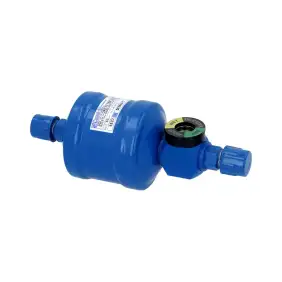
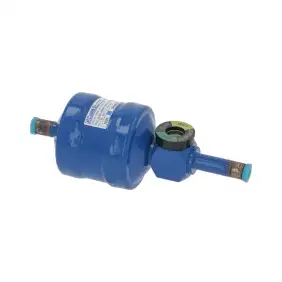
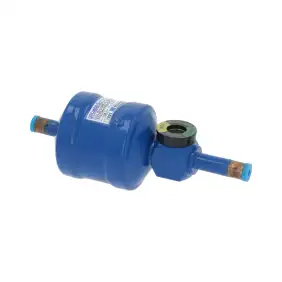
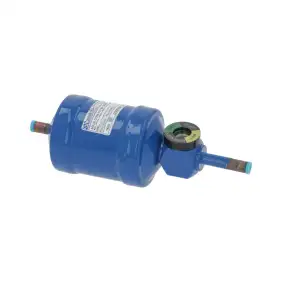
Some filter driers combine filtration and drying with an integrated humidity indicator. This is a different component configuration from a standard filter drier without an indicator.
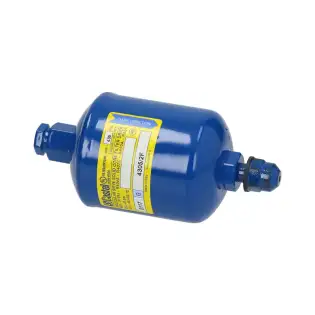
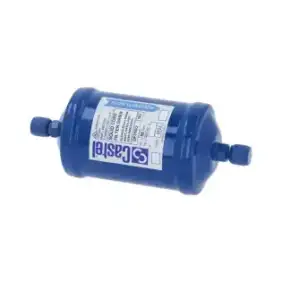
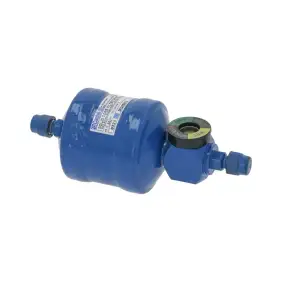
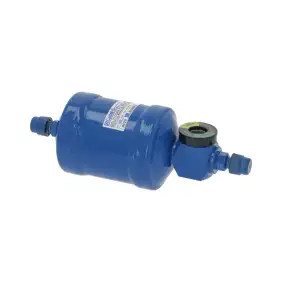
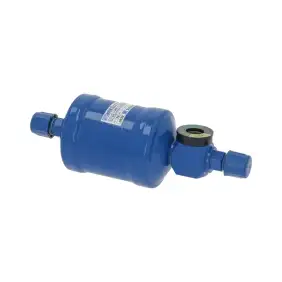
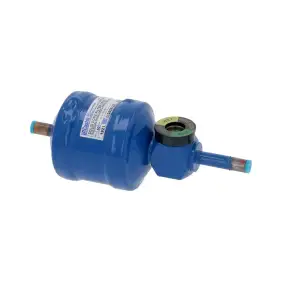
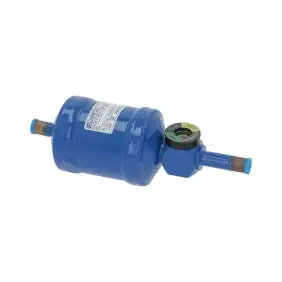
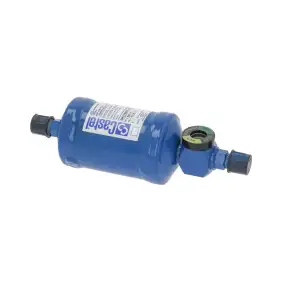
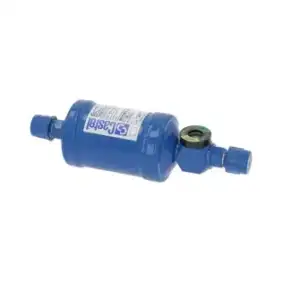
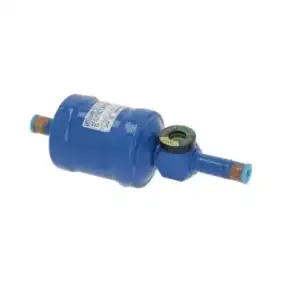
The Castel DI316N/5S filter with humidity indicator is one example from this range. When replacing this type of component, verify both the exact series and connection specification rather than selecting only by the presence of an indicator.
Complete filter drier or replacement cartridge?
Some refrigeration systems use a replaceable cartridge or core inside a separate filter housing. A cartridge is not a complete inline filter drier and requires its own compatible housing.
The Castel 4490/A 800 cm³ filter cartridge is an example of a replacement filter element rather than a complete inline filter assembly.
Before ordering, determine whether the system requires a complete filter drier or only the replacement cartridge/core. Capacity alone does not confirm cartridge-to-housing compatibility.
Filter capacity and core size
Capacity is not expressed in the same way across every product type. Compact copper filters can use gram ratings, while larger dehydrator filters and replacement cartridges can be specified by internal volume or core capacity.
These values should therefore be compared only after the correct filter construction and series have been identified. Do not directly compare a gram rating from a compact copper filter with a cm³ specification from a replacement cartridge.
Manufacturer reference and machine application
Filter driers are often manufactured as refrigeration components that can be used in different machines or systems when the complete technical interface matches. For this reason, the component reference can be more useful than equipment brand alone.
Where Brooks Parts lists a specific machine application, use it as additional confirmation. Do not assume that the same filter fits another machine solely because it has a similar capacity, outside dimensions or connection diameter.
For manufacturer-specific components, browse Dena parts, Danfoss parts and Castel parts.
Component manufacturer, reference and origin
The referenced component brand and the actual origin of a replacement part should be treated as separate information. A replacement may be compatible with a component reference from a particular manufacturer without necessarily being manufactured by that company.
Where available, distinguish:
- referenced component manufacturer;
- manufacturer or OEM reference;
- actual replacement manufacturer;
- Brooks reference;
- origin: OEM/original or Compatible (non-original).
A product marked Compatible (non-original) should not be interpreted as an original component simply because a manufacturer name or original reference is used to describe its application.
Before ordering a filter drier
Identify the existing reference whenever possible. Then compare filter construction → exact series → port configuration → connection standard → inlet size(s) → outlet size(s) → capacity/core specification → operating specifications where stated → physical dimensions → application → origin.
For other components in the same cooling circuit, return to our refrigeration parts.