How to choose the correct espresso machine heating element
Heating elements can appear similar while differing in one specification that makes them unsuitable for the same boiler. Work from the machine identification toward the physical and electrical specifications rather than selecting by wattage alone.
1. Identify the machine and OEM reference
Start with the espresso-machine manufacturer, exact model and, where possible, the OEM part number from the parts diagram. This is especially important because manufacturers can use different boiler and element designs within the same product family.
For example, the La Cimbali Junior 1300W heating element is intended for the Cimbali Junior and should not be confused with parts for the La Cimbali M21 Junior, despite the similar model naming.
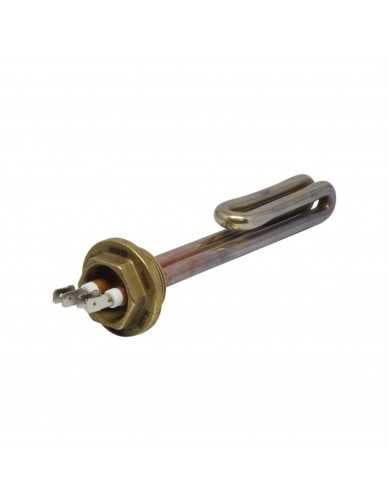
Likewise, the classic Faema E61 uses different elements depending on machine configuration. Brooks Parts carries a Faema E61 1-group 1500W element and a substantially longer Faema E61 2-group 2440/2900W element.
2. Check the heating-element flange
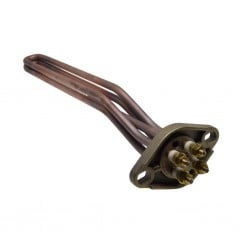
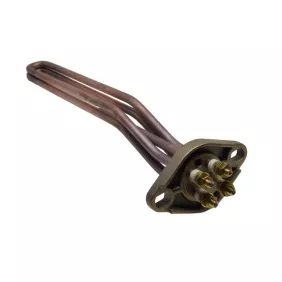
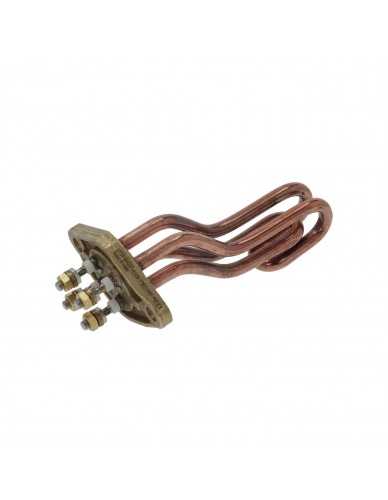
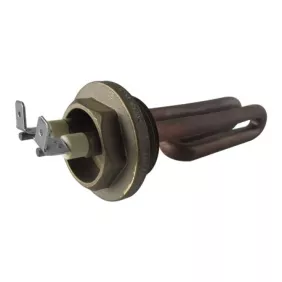
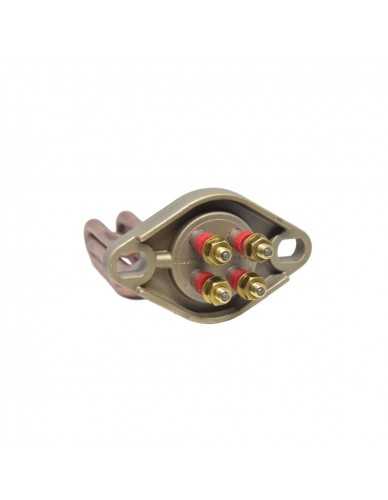
The flange is one of the most important mechanical identification points. Espresso-machine elements broadly include screw-in elements and bolt-on flange elements, but within those groups there are many different sizes and shapes.
A flange can be round, oval, square, triangular or manufacturer-specific. Bolt spacing and flange dimensions must correspond with the boiler. Do not assume that two elements from different brands will fit merely because their wattage and immersed length are similar.
Screw-in heating elements
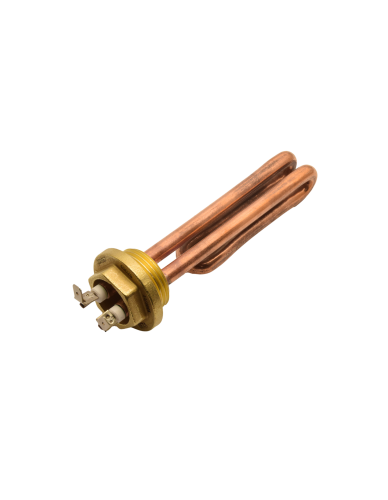
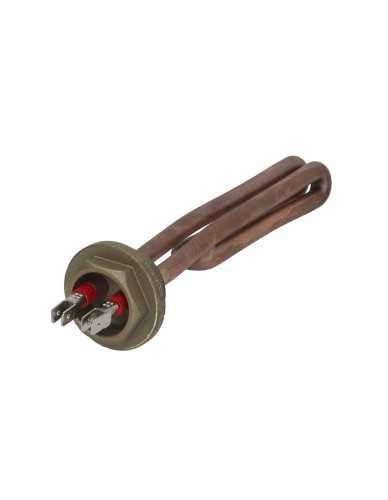
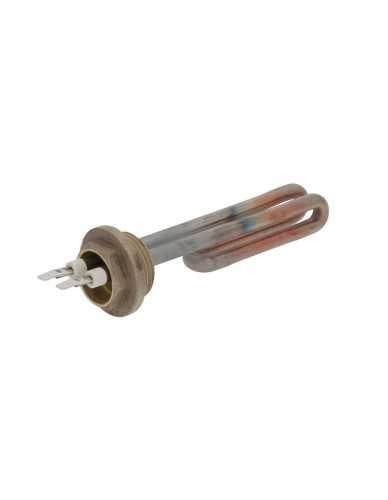
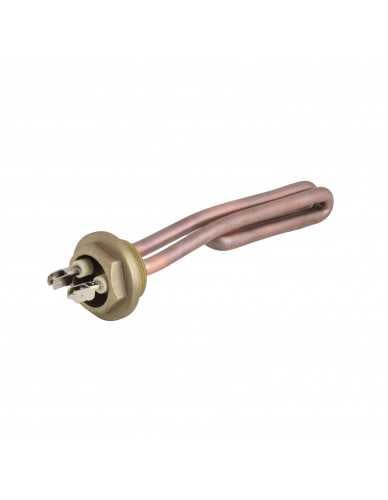
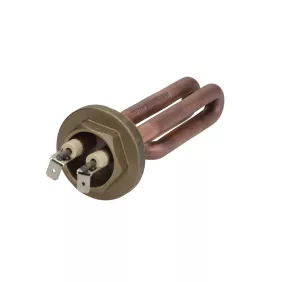
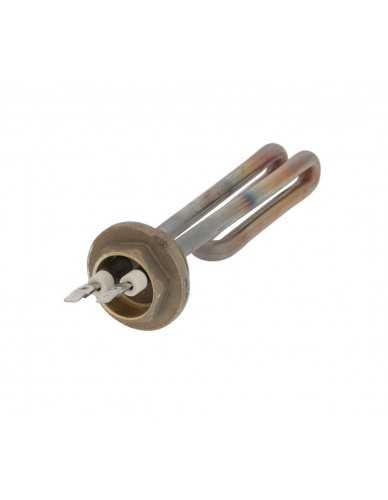
A screw-in element is threaded directly into the boiler or boiler fitting. Common screw-in sizes in the Brooks Parts range include 1" and 1¼" heating-element connections. The thread size, element length and sealing arrangement all need to match the original machine.
The Rocket 1400W 230V heating element is an example of a 1" screw-in element. It has an immersed depth of approximately 130 mm and is used with a flat heating-element gasket.
Another example is the 1400W 230V screw-in heating element used on applications from Brasilia, La Scala and Vibiemme. It also uses a 1" connection and has an immersed length of approximately 130 mm.
A shared screw-in heating element appearing under several manufacturers is not necessarily a catalogue error. Standardised element geometry can be used by multiple machine brands. Always verify the listed OEM references, thread, dimensions and electrical specification.
Bolt-on heating elements
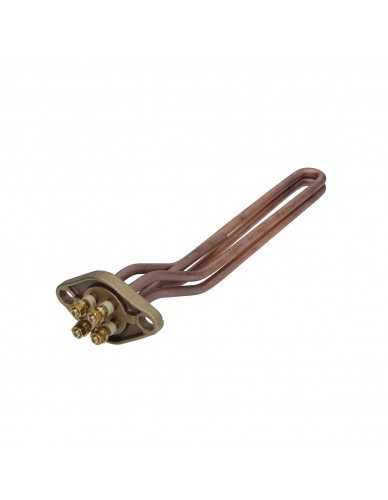
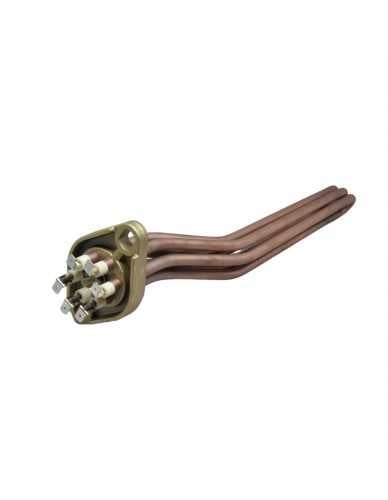
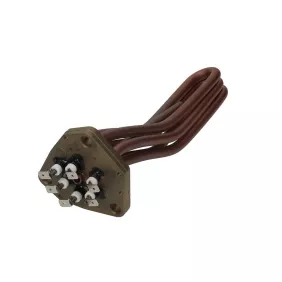
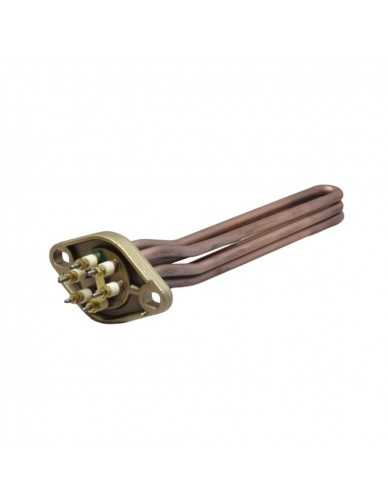
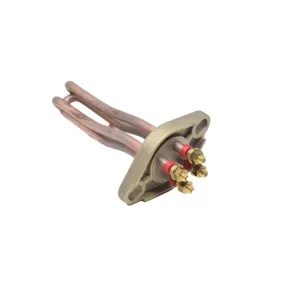
Bolt-on elements are secured to the boiler with a flange and multiple bolts. The shape of the flange, bolt-hole pattern, dimensions and gasket are critical.
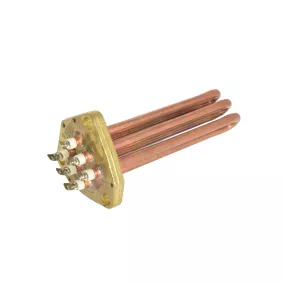
For example, the Casadio 2700W 220V heating element uses a 75 x 75 mm flange and six electrical connection poles, with provision in the flange for a heating-element thermostat.
The La Cimbali Junior 1300W element also uses a 75 x 75 mm flange, but has its own bolt spacing, element geometry and machine application. Matching a flange by its outside dimensions alone is therefore not sufficient.
Larger commercial machines can use very different bolt-on assemblies, such as the Faema / La Cimbali group 2-group 3750/4500W heating element. This type of element is used across several machines within the La Cimbali group, including Cimbali, Faema and Casadio applications.
3. Match the voltage exactly
The replacement element must be suitable for the electrical system of the machine. The Brooks Parts range includes elements specified for voltages such as 110V, 115V, 220V, 230V, 240V, and multi-voltage commercial configurations including 230/400V and similar combinations.
For example, an espresso machine intended for a 110V market requires a different element specification from a corresponding 220–240V version. The voltage should be taken from the machine data plate, wiring documentation or original element specification.
Do not install an element with a different electrical specification simply because it physically fits the boiler. Electrical connection and testing should be carried out according to the manufacturer's wiring documentation by a person qualified to work on mains-powered equipment.
4. Check the wattage
Wattage determines the electrical heating power of the element. The correct value depends on the boiler and the electrical design of the particular machine.
Small domestic and single-group machines can use elements around 1200–1800W, while larger commercial machines can use substantially higher-power elements. For example, Brooks Parts carries the 1500W Faema E61 1-group element, the 2700W Casadio element and the 3750/4500W Faema/Cimbali-group element.
Do not treat a higher wattage as an upgrade. The machine's boiler, wiring, contactors, switching components and electrical supply were designed for a specific heating load. Use the specification intended for the original machine.
5. Measure the immersed length
The immersed length is the distance that the heating portion extends into the boiler, normally measured from the inside face of the flange or threaded connection to the end of the element.
An element that is too long may physically interfere with the inside of the boiler or other components. An element with a substantially different geometry may also heat the boiler differently from the original design.
The importance of this measurement can be seen in the Faema E61 range: the 1-group E61 element has an immersed length of around 150 mm, while the 2-group E61 element extends to approximately 290 mm.
Similarly, the Wega / Astoria 2-group heating element has an immersed length of approximately 320 mm and is designed for a larger commercial boiler application.
6. Check the number of electrical terminals
Heating elements can have different numbers and layouts of electrical terminals. The terminal arrangement is related to the internal element construction and the electrical design of the machine.
For example, the Rocket 1400W element is a relatively simple domestic-style screw-in element, whereas larger commercial elements such as the Casadio 2700W element use a different terminal arrangement.
Do not reproduce wiring based only on a photograph of another machine. Use the wiring diagram and electrical specification for the exact espresso-machine model.
7. Thermostat tube, temperature probe or boiler control
Some heating-element flanges include a tube or opening for a thermostat or other temperature-control component. Others are used in machines where boiler temperature is monitored elsewhere.
The Faema E61 2-group element and Wega/Astoria 2-group element, for example, include provision associated with a heating-element thermostat.
If the temperature-control component also requires replacement, see espresso machine thermostats and temperature probes. Some machines instead control boiler heating in conjunction with a pressure switch. Always follow the control system used by the original machine.
Heating-element gaskets
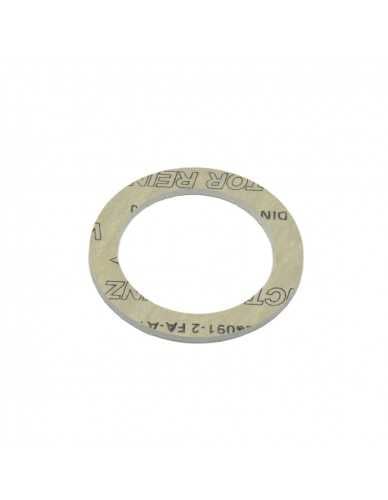
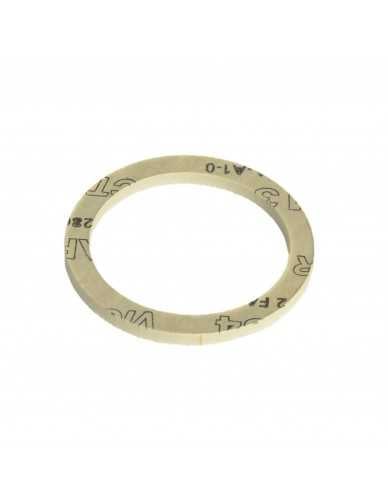
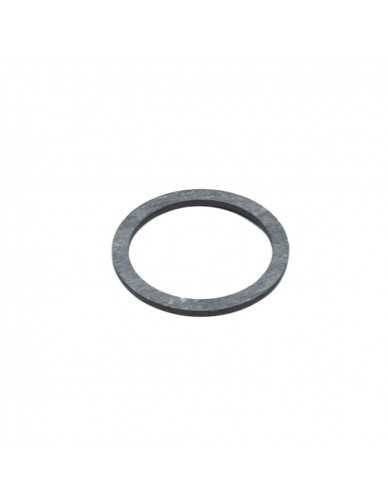
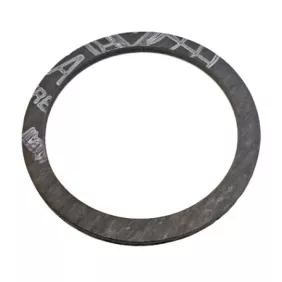
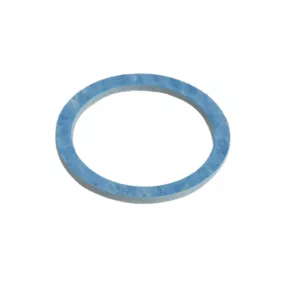
Replacing a heating element often also requires a new gasket. The gasket must correspond with the flange or threaded element and the boiler sealing surface. A heating element does not automatically include a gasket unless this is explicitly stated on the product page.
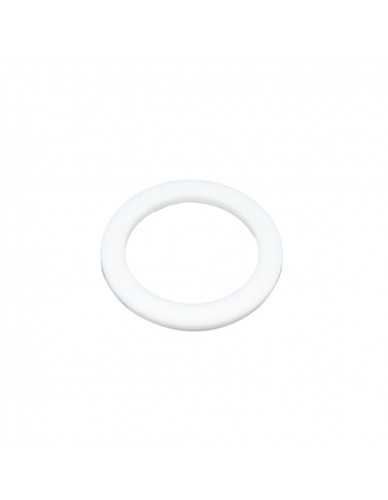
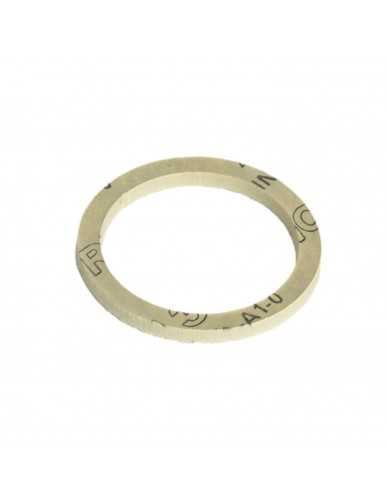
For a typical 1" screw-in heating element, one available option is the PTFE heating-element gasket 42 x 33 x 3 mm. For larger screw-in connections, Brooks Parts also carries gaskets such as the 53 x 42 x 3 mm AFM34 heating-element gasket.
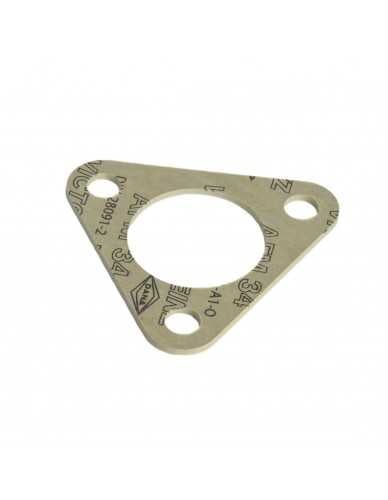
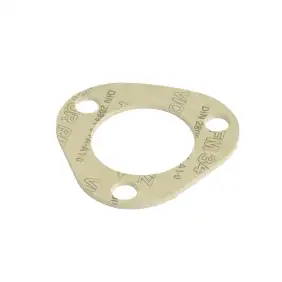
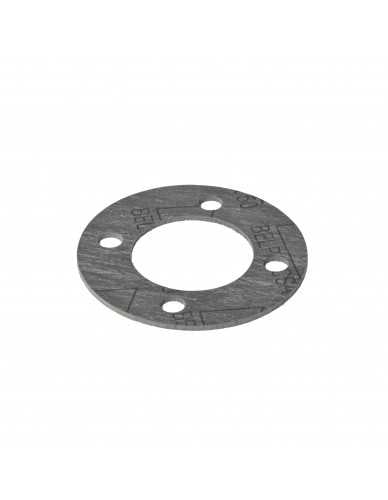
Bolt-on elements use many other gasket shapes and sizes, including rectangular, triangular and manufacturer-specific designs. Do not select a gasket only from the number of flange bolts. Compare the outer dimensions, inner opening, thickness, material and original part reference.
For other boiler sealing components, browse espresso machine boiler gaskets.
Heating elements for 1-group and multi-group espresso machines
The number of brewing groups can help identify the correct element because larger machines often use larger boilers and higher-capacity heating systems. However, group count alone is not a part number.
The difference between the Faema E61 1-group element and Faema E61 2-group element clearly illustrates how machine configuration can change both length and power.
Conversely, one heating element can sometimes be listed for more than one machine size or more than one brand. Use the OEM application data rather than assuming that every 1-group or 2-group machine uses the same element.
Shared heating elements across espresso-machine brands
Heating elements can be shared between several brands when those machines use the same boiler or compatible heating-element geometry.
For example, the Wega 2-group heating element also carries an Astoria reference, while the Faema 2-group 3750/4500W element is used across machines from the La Cimbali group.
Likewise, the 1400W 230V screw-in element has applications and OEM references for Brasilia, La Scala and Vibiemme.
This type of shared compatibility is normal. The correct identification points remain the OEM reference, flange, dimensions, voltage, wattage and installation geometry.
Heating element or another boiler fault?
A machine that does not heat correctly does not automatically have a failed heating element. The heating circuit can also involve thermostats, pressure switches, temperature sensors, relays, contactors, wiring and electronic controls.
Before replacing the element solely because the boiler does not heat, the fault should be diagnosed correctly. Related components can be found under thermostats, temperature probes and pressure switches.
Limescale on an espresso machine heating element
Because the heating element is submerged in boiler water, mineral deposits can build up on its surface over time. Heavy scale can also indicate that the rest of the boiler requires inspection and maintenance.
When servicing an element, avoid allowing cleaning liquid or water to enter electrical terminals, insulating areas or parts of the flange that are not designed to be submerged. Never energise a heating element outside the correctly filled boiler.
If a heavily scaled element is removed from an older boiler, also inspect the boiler and related components for scale, corrosion and damaged sealing surfaces before reassembly.
Should the heating-element gasket be replaced?
When an element is removed from a boiler, inspect the gasket and sealing surfaces carefully. A compressed, hardened, cracked or damaged gasket should not simply be reused.
Even with the correct new element, leakage can occur if the flange face is damaged, scale remains on the sealing surface or the wrong gasket dimensions are used. Clean and inspect the mating surfaces before fitting the replacement.
How to identify an unknown heating element
If the original part number is unavailable, collect as much information as possible before selecting a replacement:
1. Espresso-machine manufacturer and exact model.
2. Number of brewing groups.
3. Voltage shown on the machine and original element.
4. Wattage of the original element.
5. Screw-in or bolt-on flange type.
6. Thread size or complete flange dimensions.
7. Bolt-hole number, spacing and flange shape.
8. Immersed length and overall element geometry.
9. Number and arrangement of electrical terminals.
10. Thermostat/probe tube or opening, if present.
11. Gasket dimensions and shape.
12. Any OEM numbers stamped on the original part or listed in the parts manual.
Clear photographs of the flange, terminals and complete element can also help distinguish between versions that have similar electrical ratings.
Safety when replacing an espresso machine heating element
Heating elements are connected to mains electricity and are installed in boilers that operate with hot water, steam and pressure. Disconnect the espresso machine from the electrical supply and water supply and allow the boiler to cool and depressurise completely before servicing it.
After replacement, the boiler must be correctly filled before the element is energised. Electrical wiring, insulation resistance, protective earth and the heating-control circuit should be checked according to the machine manufacturer's service procedure.
If you are not qualified to work on mains electrical equipment and pressurised espresso-machine boilers, have the replacement carried out by a qualified service technician.
Need help finding the correct heating element?
If you cannot identify the heating element from the machine model or OEM reference, provide the voltage, wattage, flange dimensions, immersed length, terminal arrangement and clear photographs of the original element. Brooks Parts can use these details to help distinguish between similar heating-element versions.
You can also browse espresso machine boiler components for related boiler parts and sealing components.