How to choose the correct espresso machine plug
A plug may be one of the simplest-looking fittings in an espresso machine, but the replacement still needs to match the original connection correctly. Work through the thread size, thread gender and sealing arrangement before ordering.
1. Determine whether you need a male or female plug
First inspect the connection that needs to be closed. If the machine has a female internal thread, the plug normally needs a male external thread. If the machine has a male external thread, use a female plug that screws over it.
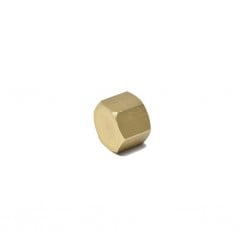
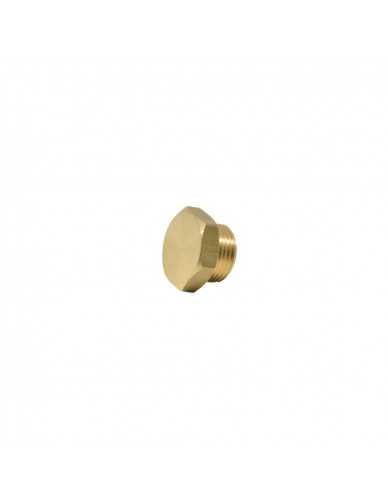
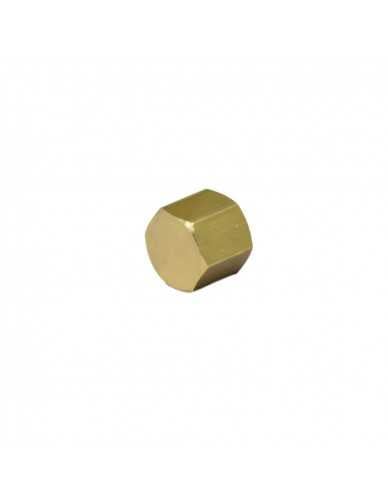
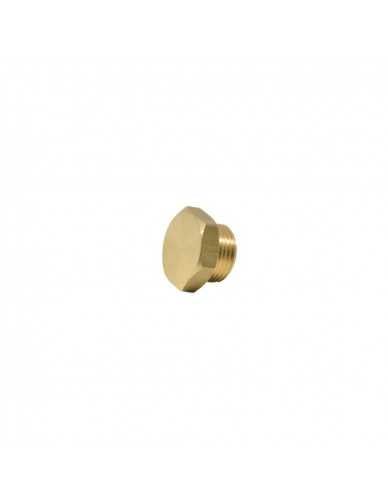
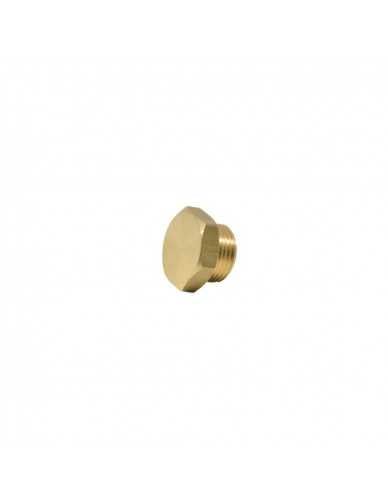
For example, the 1/4" male brass plug has a male external thread and is used where the mating component has the corresponding female connection. The 1/4" female plug has the opposite arrangement and closes a male 1/4" connection.
2. Identify the BSP-G thread size
The plugs in this category are available in the common BSP-G sizes 1/8", 1/4", 3/8" and 1/2". These inch designations refer to the nominal pipe-thread system and should not be interpreted as a direct measurement of the outside diameter of the threaded component.
When replacing an existing plug, use the original fitting, machine parts diagram or OEM reference as your primary identification source. If you measure the thread, compare the measurement with the correct BSP-G thread specification rather than assuming that the measured outside diameter should equal the nominal inch size.
3. Check how the connection is sealed
A plug must not only have the correct thread; it must also seal correctly. BSP-G is a parallel thread, so the original connection can rely on a separate sealing surface, washer, gasket or another specified sealing method rather than the thread geometry alone.
Depending on the original machine construction, a plug can be used with a flat gasket, copper washer or an appropriate thread-sealing method. Do not automatically apply the same sealing method to every BSP-G connection. Reproduce the sealing arrangement specified for the original fitting.
1/8" BSP-G plugs
One-eighth-inch BSP-G is the smallest thread size in this plug category. For a female threaded machine port, use the 1/8" male plug when it matches the original connection.
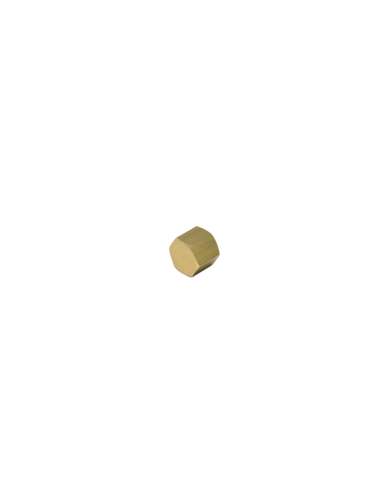
To close a male 1/8" BSP-G connection, see the 1/8" female plug. This plug has an internal 1/8" BSP-G thread and is designed to fit over a corresponding male fitting.
Because both products are described as 1/8" plugs, always include the male/female designation when identifying or ordering the replacement.
1/4" BSP-G plugs
For 1/4" BSP-G connections, Brooks Parts supplies both a 1/4" male plug and a 1/4" female plug.
The female version can be used in different hydraulic applications where a male connection needs to be closed, including machine-specific boiler, brewing-group and valve arrangements where this corresponds with the original design.
The male 1/4" plug is a generic fitting that appears in applications from several espresso-machine manufacturers. This is a good example of a shared component: compatibility should be determined from the thread, dimensions and OEM cross-reference rather than from brand name alone.
3/8" BSP-G plugs
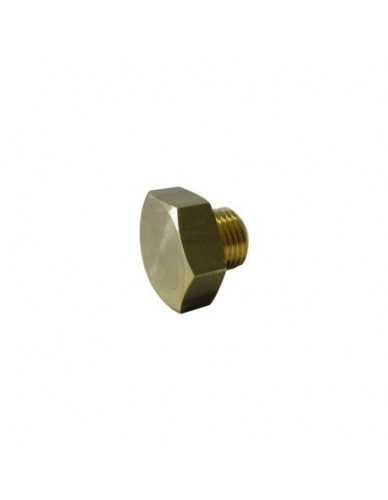
The 3/8" range again contains two distinct fittings. The 3/8" male plug has an external thread and closes an appropriate female port.
The 3/8" female plug has a 3/8" BSP-G internal thread and is intended for a corresponding male connection. The mating component and sealing arrangement must still be checked before installation.
A 3/8" male and 3/8" female plug share the same nominal thread size but perform opposite connection roles. They should therefore never be treated as interchangeable alternatives.
1/2" BSP-G plugs
The largest thread size in this category is 1/2" BSP-G. For a female 1/2" port, Brooks Parts supplies the 1/2" male plug.
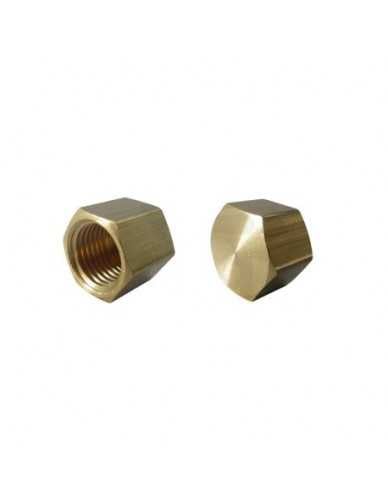
The 1/2" female plug has the thread on the inside and can close a corresponding male 1/2" connection. Both are machined brass fittings and should be selected according to the original hydraulic assembly.
Male vs female plug: a simple identification rule
When identifying a replacement, look at the plug itself, not only at the port:
Male plug: visible external thread on the plug.
Female plug: internal thread inside the plug.
Another way to think about it is to identify the connection being closed:
Female machine port → male plug
Male machine connection → female plug
This distinction is particularly important when searching by a generic term such as “1/4 BSP plug”, because that description does not yet tell you which of the two versions you need.
Where are threaded plugs used in an espresso machine?
Threaded plugs can be found in different parts of an espresso-machine hydraulic system. Depending on the manufacturer and model, they may close service ports, unused hydraulic connections, openings in valve bodies, brewing-group connections or boiler fittings.
The same generic plug can therefore appear on machines from multiple brands. A manufacturer does not necessarily need a unique plug when a standard fitting with the correct thread and dimensions performs the required function.
At the same time, never assume that an unused-looking threaded hole is intended to be plugged. Its function must be identified first.
Do not plug an unidentified boiler connection
Boilers can have threaded connections for essential components such as safety valves, anti-vacuum valves, pressure-control components, level systems and other required equipment.
Never install a blanking plug simply because a port appears unused. Confirm the function from the machine's parts diagram, service documentation or original configuration before closing a boiler or pressure-system connection.
Safety and anti-vacuum connections in particular are functional parts of the boiler system and should not be removed or blanked off unless the machine manufacturer explicitly specifies a different configuration.
How does a BSP-G plug seal?
BSP-G uses a parallel thread. In many espresso-machine fittings, the thread provides the mechanical connection while the actual seal is made elsewhere in the joint.
Depending on the component, this can involve a flat sealing face, copper washer, fibre or other gasket, or a sealing method specified for that particular threaded connection.
For this reason, finding a plug that screws into the port does not by itself prove that the connection is complete. Inspect the original sealing arrangement and check whether a washer or gasket is required.
Flat gaskets, copper washers and thread sealant
The correct sealing method depends on how the original fitting was designed. If the plug seals against a defined flat face, the correct washer or gasket must fit both the plug and the mating surface.
Where the machine manufacturer specifies a suitable thread sealant, use a product appropriate for the temperature, pressure, water contact and material combination of that particular connection. Do not compensate for damaged threads or an incorrect plug by applying excessive sealing material.
Generic plugs and OEM applications
Most plugs in this category are relatively simple brass fittings and can be used across more than one espresso-machine brand when the technical specification is the same. This is normal for shared hydraulic components.
For example, the 1/4" male plug is associated with applications from several manufacturers. The correct way to identify such a shared fitting is through thread size, gender, dimensions, sealing arrangement and any available OEM references.
Do not reject a fitting simply because several brands are listed for it, but also do not assume that every 1/4" or 3/8" plug is suitable for every machine using that nominal thread size.
Plug, adapter, nipple or T-fitting?
A plug is only appropriate when a connection is supposed to be closed. If the hydraulic circuit needs to continue, another fitting type may be required.
Use an adapter when the connection needs to change from one thread size or gender to another.
Use a nipple for an appropriate straight threaded connection between components.
Use T and elbow fittings when the hydraulic connection needs to branch or change direction rather than terminate.
Browse all espresso machine fittings when the original connection requires a different type of brass fitting.
How to identify a replacement plug
Before ordering, record the following information:
1. Is the original plug male or female?
2. What is the BSP-G thread size?
3. How does the original connection seal?
4. Is a gasket or washer fitted?
5. What are the physical dimensions of the original plug?
6. Is an OEM reference available in the machine parts diagram?
7. What is the function of the port being closed?
If the original plug is missing, do not identify the replacement only by trial-fitting parts into the machine. Determine the original port specification from documentation or measure the connection correctly before ordering.
Checking a plug after installation
Espresso-machine water, boiler and steam circuits can operate at elevated temperature and pressure. Before replacing a plug, disconnect the machine from the electrical and water supplies and allow the system to cool and depressurise completely.
Inspect the mating threads and sealing surfaces before installation. Damaged threads, corrosion or a damaged sealing face can cause leakage even when the correct plug is fitted.
After reassembly, check the connection carefully during commissioning and again when the machine reaches its normal operating conditions. If the connection does not seal correctly, stop the machine and determine the cause rather than simply tightening the plug further.
Need help identifying an espresso machine plug?
If you cannot identify the correct plug, determine whether the connection is male or female and measure or identify the BSP-G thread size. Clear photographs of the original plug, the threaded port and the surrounding machine components can also help determine the correct fitting and the purpose of the connection.
If you are unsure whether a boiler or hydraulic port should be closed at all, first identify its function from the machine parts diagram or contact Brooks Parts for assistance before installing a plug.