How to find the correct double portafilter
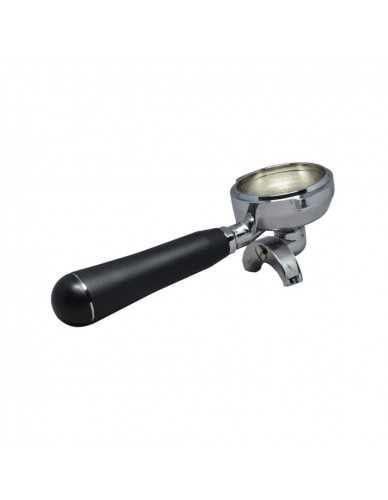
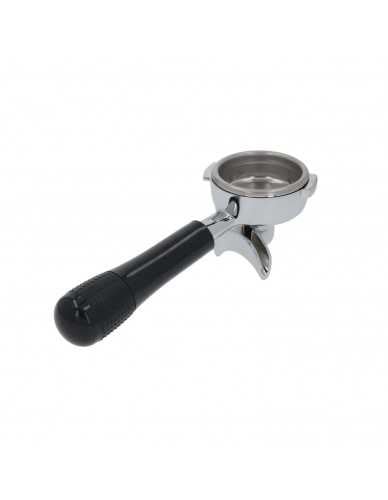
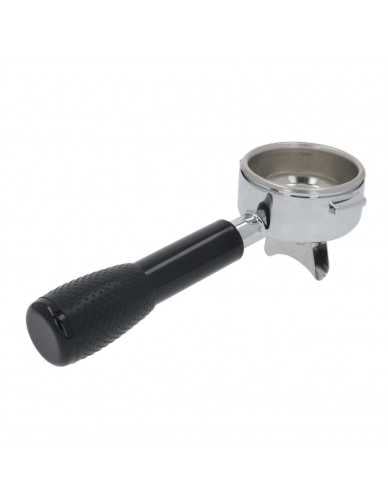
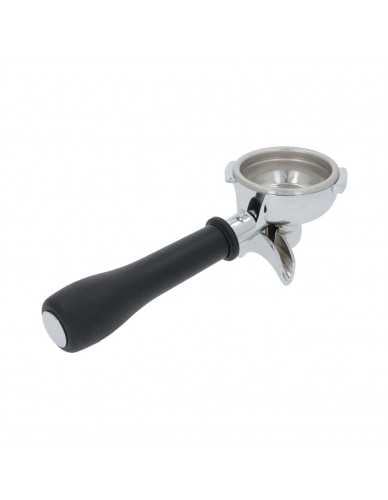
A double portafilter is identified by more than the fact that it has two coffee outlets. The portafilter body must first lock correctly into the brewing group. Only after the correct locking system has been identified should the spout, basket and supplied components be compared.
Where possible, identify the replacement in this order:
machine manufacturer → exact model/version → OEM reference → brewing group/locking system → number of locking lugs → lug orientation → lug thickness → portafilter-body system → double-spout connection → basket and spring → listed machine application
Start with the espresso machine and OEM reference
The machine manufacturer and exact model are normally the strongest starting points. Use espresso machine parts by brand and model before comparing portafilter dimensions.
Do not assume that all espresso machines from one manufacturer use the same brewing group. Commercial and domestic models, different generations and even models within the same professional range can use different locking systems.
If an OEM reference is available on the original part, an exploded view or service documentation, compare that reference together with the technical specifications and listed machine applications.
“Double” describes the configuration, not the brewing-group fit
A double portafilter is normally assembled for use with a double filter basket and a two-coffee spout. This does not mean that every double portafilter uses the same body or locking geometry.
Within some machine families, single and double portafilters can share a similar body or locking system. In other cases the complete OEM assembly, body design, basket, spring, spout or handle can differ.
For replacement purposes, identify the complete portafilter from its application and locking geometry rather than treating a double portafilter as simply a single portafilter with another spout.
Locking geometry determines whether the portafilter fits
The locking lugs on the portafilter body engage with the brewing group. Several specifications need to correspond.
Number of locking lugs
Many commercial espresso-machine portafilters use two locking lugs, but three-lug systems also exist. The number of lugs must correspond to the brewing-group design.
Lug orientation
Double portafilters in this category include configurations with locking lugs positioned at angles such as 45° and 90°. This helps distinguish different locking systems.
Lug thickness
Lug thickness affects how the portafilter engages with the brewing group. Small differences can indicate a different group or machine application.
However, none of these specifications should be used alone. Even the same lug orientation and thickness do not automatically prove compatibility.
The same lug dimensions do not automatically mean the same portafilter
Gaggia provides a useful example.
The Gaggia Baby / Classic double portafilter, Brooks reference 55-255-L-5047148 and Gaggia reference 8332018000, is intended for domestic models including the Gaggia Classic and New Baby. It has 45° locking lugs with a thickness of 7 mm and is supplied with a double filter basket and retaining spring.
The Gaggia commercial double portafilter, Brooks reference 37-025-L-1165108, uses references including 8027086000 and WGA8001060000. It also has 45° locking lugs with a thickness of 7 mm, but is listed for commercial machines such as the D90, E90, GD, GE, XD and XE.
This demonstrates why:
same brand + double + 45° + 7 mm ≠ automatically the same portafilter
The exact machine application and OEM reference remain essential.
E61 does not identify one universal double portafilter
The terms E61 and E61-style are used for several traditional brewing-group designs, but they should not be treated as one universal portafilter specification.
The Faema E61 Legend/Jubilee double portafilter, Brooks reference 50-776-L-1165325 and Faema reference 2771-135 803, has two locking lugs positioned at 90° with a thickness of 6.3 mm. It uses a 3/8" BSP-G spout connection and is supplied with a double basket and spring.
This model is intended for the Faema E61 Legend and Jubilé and is specifically not the same portafilter used on the vintage Faema E61.
E61/E61-style + similar nominal size ≠ automatically the same portafilter fit
Three-lug double portafilters
Not every double portafilter uses a two-lug bayonet.
The La San Marco double portafilter, Brooks reference 49-346-L-1165021, uses a three-lug locking configuration with lugs approximately 7.4 mm thick. It corresponds with La San Marco reference 4000154 and is listed for multiple San Marco applications, but not for the SM85-Flexa brewing group.
Even with three-lug systems, the lug count alone is therefore not sufficient. The exact geometry and machine application must still correspond.
Machine brand does not always identify the brewing group
Different brewing groups can be used within the range of a single espresso-machine manufacturer.
For example, the La Cimbali modern double portafilter has 90° locking lugs with a thickness of 5.5 mm and a 3/8" BSP-G double spout. It is supplied with a stainless-steel retaining spring and filter basket.
However, this portafilter is not intended for certain La Cimbali M27 2008 versions that use a Faema-type brewing group.
This is why the selection should be based on:
machine model → actual brewing group → portafilter geometry
rather than machine brand alone.
Nominal portafilter size is only one part of the specification
Dimensions such as 58 mm, 65 mm or other nominal system sizes can help distinguish portafilter families, but they do not describe the complete locking system.
The Astoria/Wega 65 mm double portafilter, Brooks reference 50-756-L-1165115, is a specific example. It has 90° locking lugs with a thickness of 7 mm and corresponds with Astoria reference 27311057 and Wega reference WY27311057. It is specifically listed for the Astoria Plus 4 You and Wega Concept 52.
A nominal size should therefore be treated as an additional specification, not as proof of machine compatibility.
Double coffee spouts are not all the same
Once the correct portafilter body has been identified, the coffee spout is another specification to compare.
Double spouts can differ in design, including:
- open double spouts;
- closed double spouts;
- closed versions with a removable cover;
- older or machine-specific attachment designs.
These differences can affect cleaning, appearance and serviceability, but the connection to the portafilter body must also be correct.
3/8" BSP-G and M16 spout threads are not interchangeable
A common double-spout connection is 3/8" BSP-G, but metric M16 connections are also used on certain portafilter systems.
These are different thread standards. A nominal 3/8" BSP-G connection must not be treated as equivalent to M16.
For a replacement portafilter spout, use:
spout configuration → thread standard → thread size → portafilter body → OEM/application
Do not select a replacement merely because both parts are described as “double spout”.
Check what is included with the complete portafilter
The supplied components differ between products. A double portafilter can be supplied with:
- a double filter basket;
- a filter-basket retaining spring;
- a double coffee spout;
- a handle;
- or only some of these components.
For example, the Gaggia Baby/Classic double portafilter includes a basket and spring, while other complete portafilters in the category can be supplied without these components.
Always check the individual product page instead of assuming a standard category-wide configuration.
Double portafilter fit and double filter-basket fit are separate
The portafilter must lock into the brewing group, while the double filter basket must fit inside the portafilter body.
A correct double portafilter therefore does not mean that every double basket will fit it.
For the basket, compare specifications such as:
external rim diameter → basket body diameter → overall height → dose range → ridged/ridgeless retention → listed application
A similar dose capacity or tamper diameter does not prove mechanical compatibility.
Filter-basket retaining spring
A retaining spring normally sits inside the portafilter body and holds the filter basket in position.
If the portafilter locks correctly into the machine but the basket is loose or difficult to retain, inspect the spring and basket combination separately.
Replacement parts can be found in the portafilter spring category.
OEM and compatible double portafilters
An OEM/original portafilter is supplied under, or directly corresponds with, the original machine manufacturer's part reference. A compatible double portafilter is supplied as an alternative for a confirmed application.
Compatible does not mean universal. A compatible portafilter must still match the brewing group, locking geometry, dimensions and listed machine application.
Where available, use the OEM reference together with the Brooks reference and technical specifications when identifying a replacement.
Compatible machine brand and component manufacturer are different entities
A compatible double portafilter can be intended for a particular espresso-machine brand without having been manufactured by that machine manufacturer.
When identifying a product, distinguish between:
- compatible espresso-machine brand;
- exact machine/model application;
- OEM reference;
- actual component manufacturer, where known;
- OEM/original or compatible status;
- Brooks product reference.
A double portafilter does not have to be used for exactly two cups
The term “double” describes the portafilter configuration. It commonly refers to a double basket and double-spout assembly, but the actual beverage recipe and dose are determined by the basket and how the machine is being used.
Do not use “two cups” as a compatibility specification for the portafilter itself.
Portafilter gasket and locking position
If a correctly specified double portafilter rotates unusually far, becomes tight much earlier than expected or leaks around the brewing group during extraction, the portafilter gasket can also be relevant.
A worn or incorrectly specified group gasket should not automatically be compensated for by choosing another portafilter. Identify the portafilter and gasket independently.
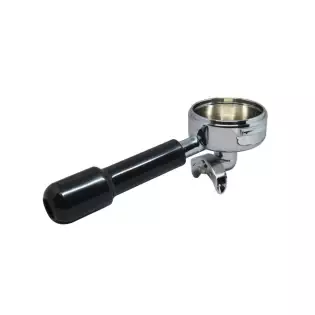
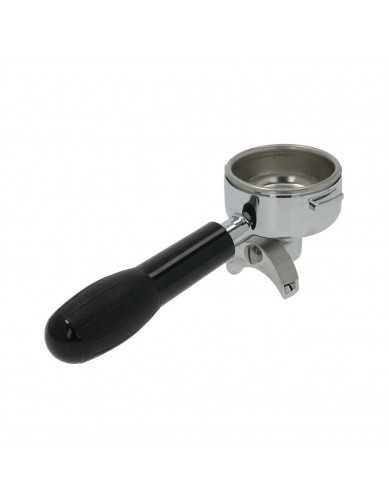
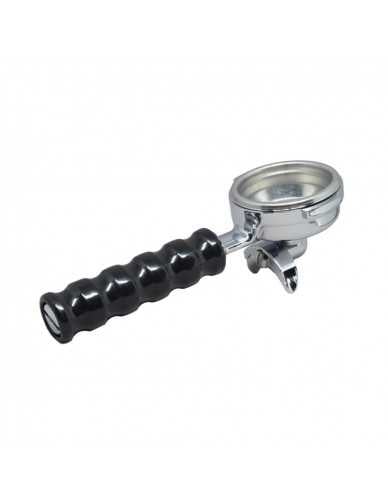
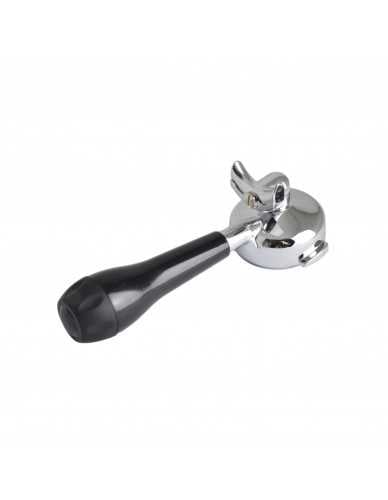
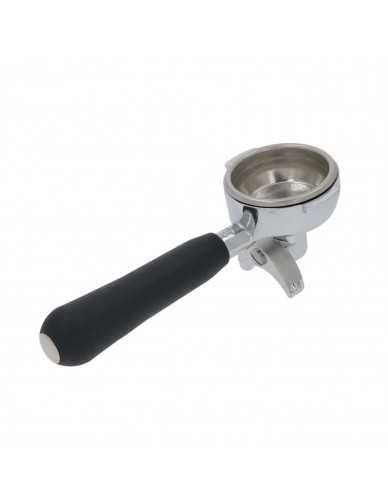
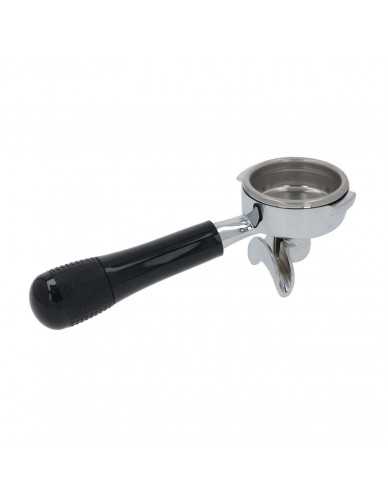
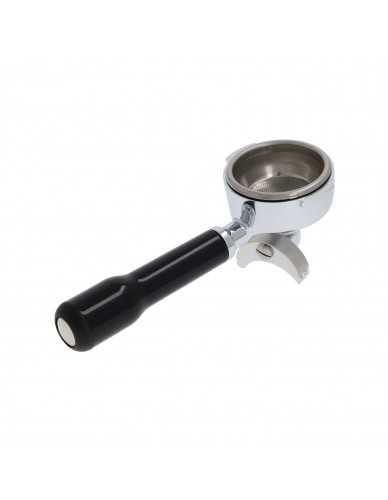
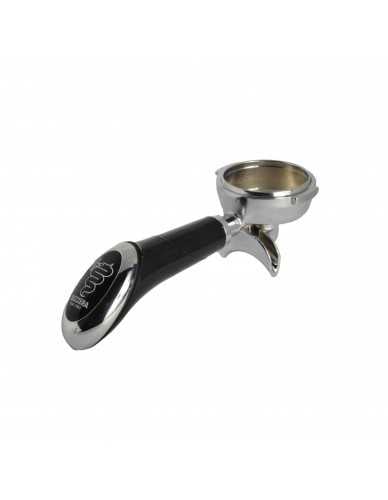
Do not identify a double portafilter from appearance alone
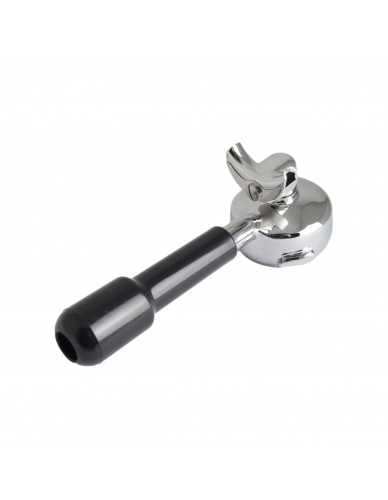
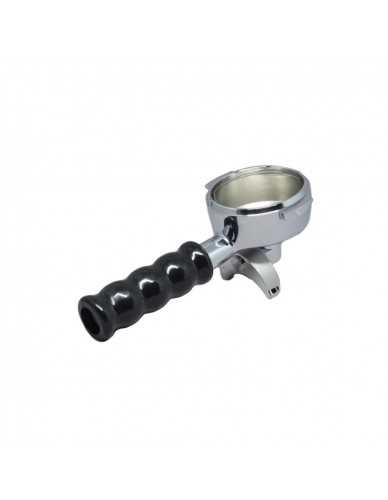
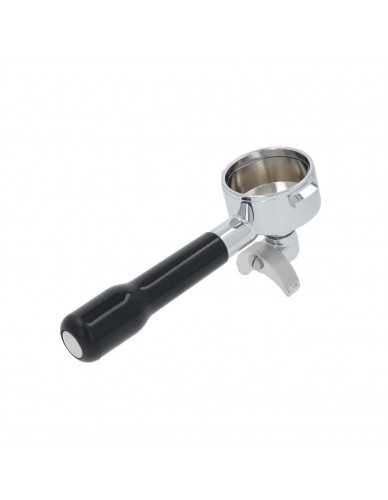
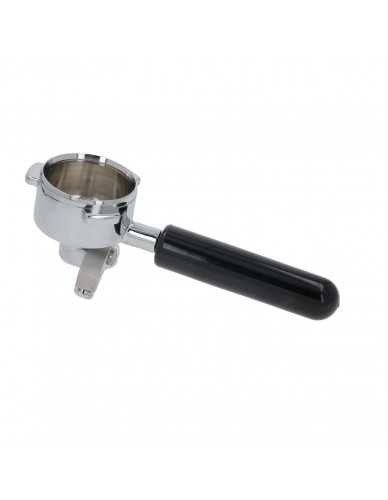
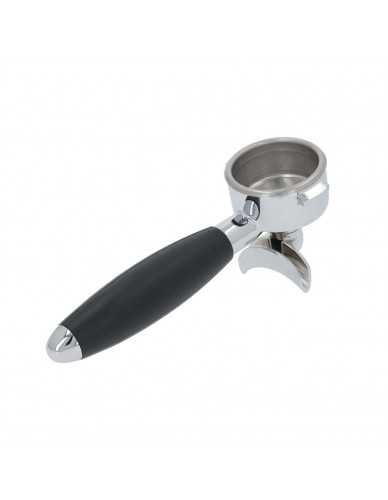
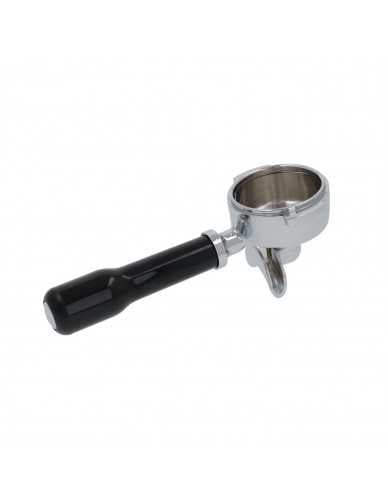
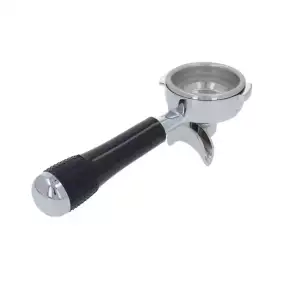
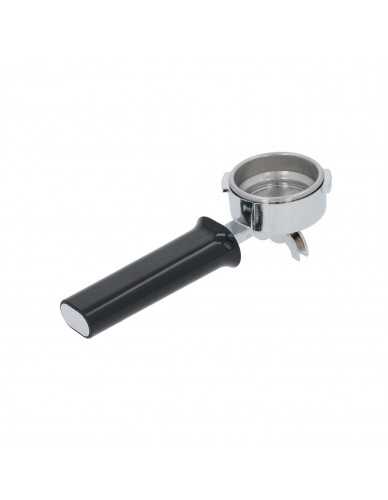
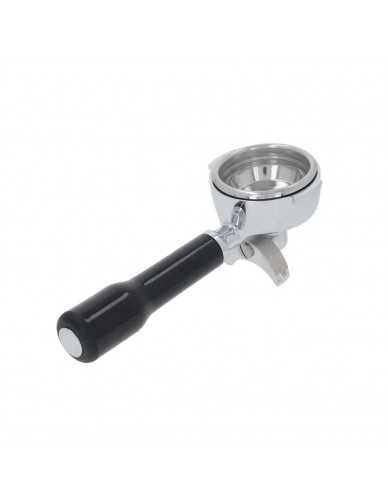
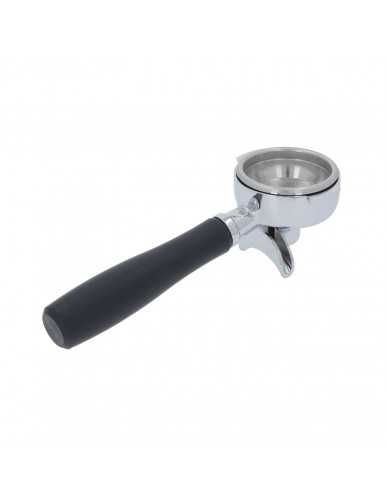
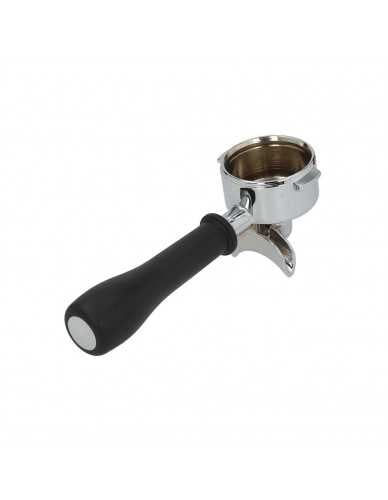
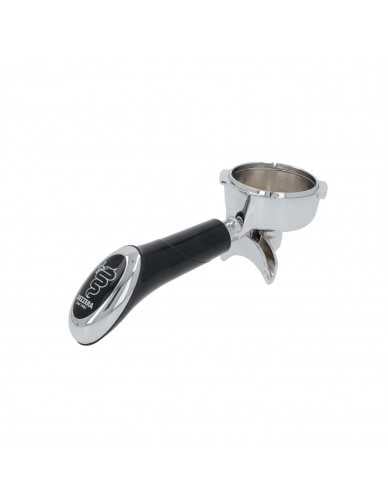
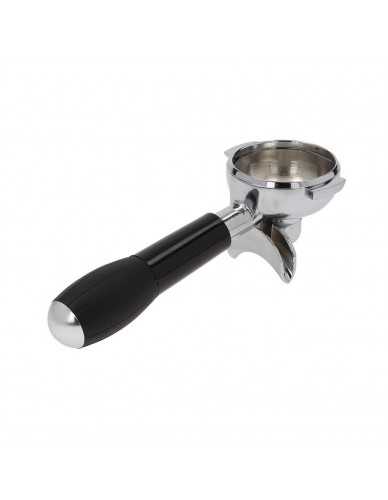
Chrome-plated double portafilters with similar handles and spouts can look almost identical while using different locking systems.
Where possible, combine:
- machine manufacturer;
- exact model/version;
- OEM reference;
- brewing group/locking system;
- number of locking lugs;
- lug orientation;
- lug thickness;
- portafilter/body system;
- double-spout type and thread;
- included filter basket and spring;
- listed machine applications.
Cleaning and service
Remove the filter basket and spout where appropriate and clean the portafilter according to the instructions of the espresso-machine and cleaning-product manufacturers.
Avoid automatically immersing the handle or decorative handle materials unless they are suitable for the chosen cleaning method.
Availability
Availability and lead time vary by double portafilter, manufacturer and machine application. Use the individual product page for the current product status, supplied components and complete available technical specifications.