How to find the correct bottomless portafilter
The most important question is not simply whether an espresso machine uses a 53 mm or 58 mm basket system, but whether the bottomless portafilter has the correct locking geometry for the brewing group.
Where possible, identify the replacement in this order:
machine manufacturer → exact model/version → OEM reference → brewing group/locking system → number of locking lugs → lug orientation → lug thickness → basket/body dimensions → included components → listed machine compatibility
Start with the espresso machine and OEM application
The machine manufacturer and exact model are normally the strongest starting points. Use espresso machine parts by brand and model before comparing physical dimensions.
Do not assume that every espresso machine from one manufacturer uses the same portafilter. Different domestic and commercial models, or different brewing groups within the same brand, can use completely different locking systems.
If an OEM reference or confirmed application is available from the original component, parts diagram or service documentation, use it together with the locking dimensions.
What is different about a bottomless or naked portafilter?
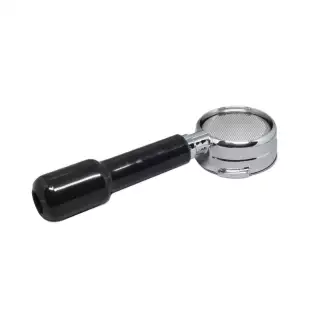
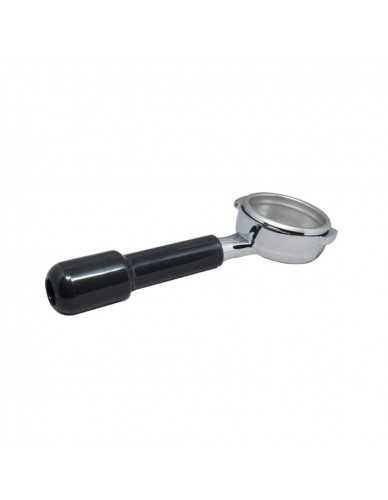
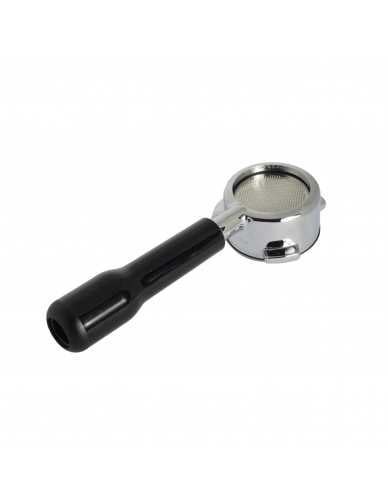
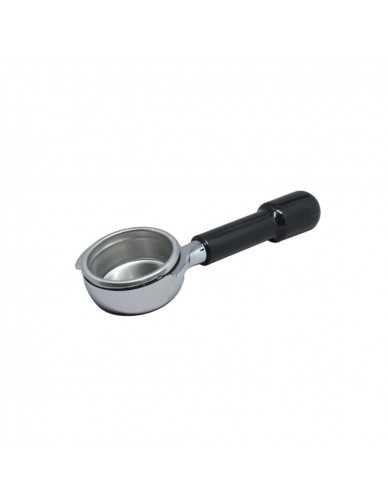
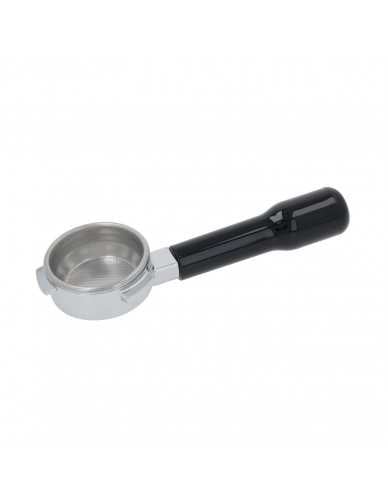
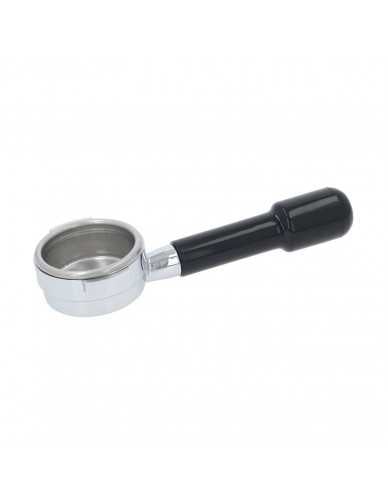
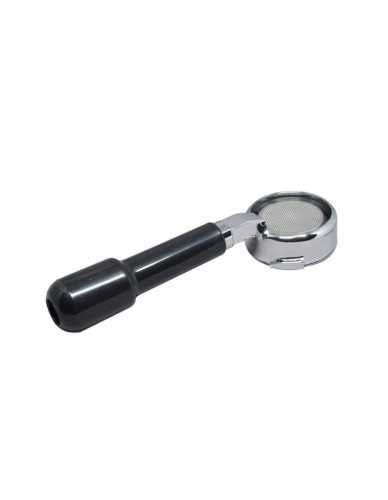
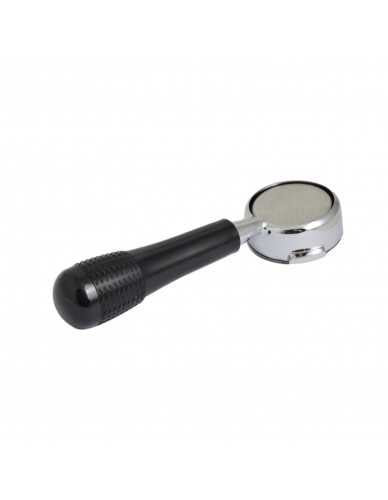
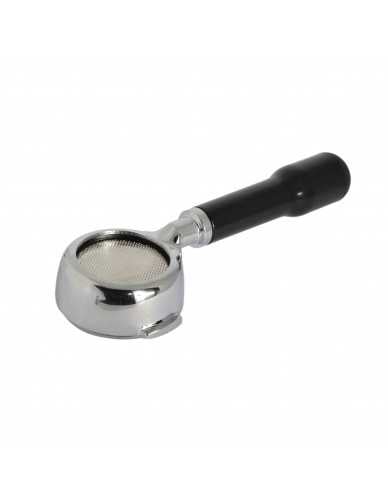
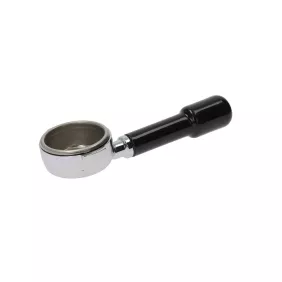
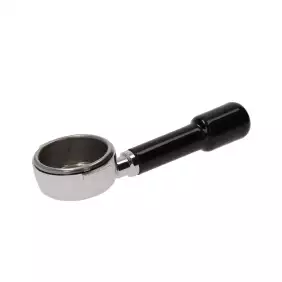
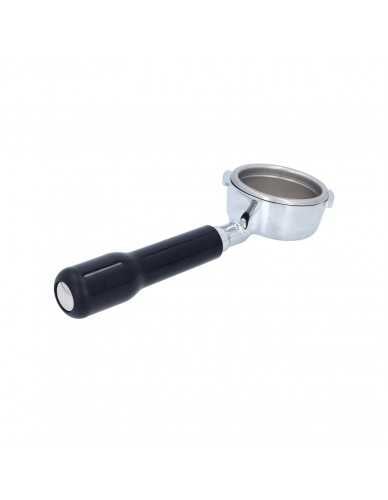
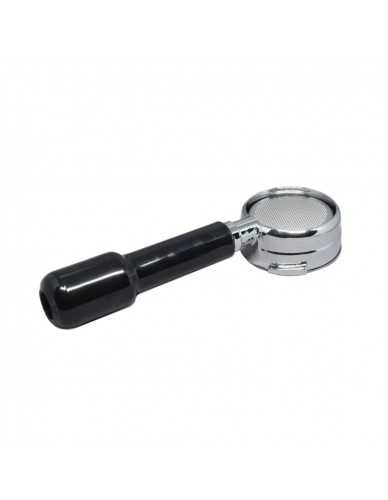
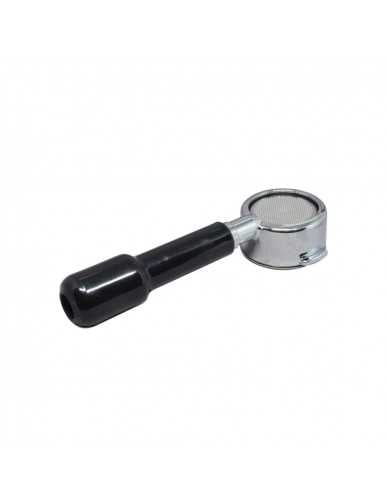
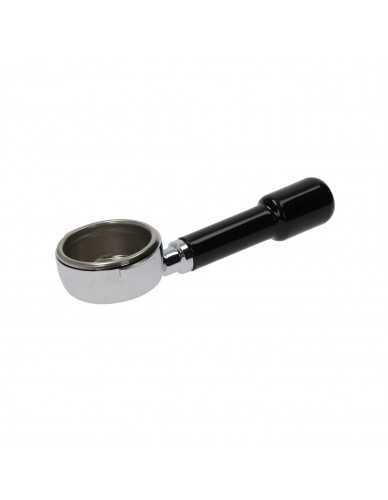
A conventional portafilter normally has a closed lower body and one or more coffee spouts beneath the filter basket. A bottomless or naked portafilter leaves the underside of the basket open.
After the espresso leaves the filter basket, it can therefore flow directly towards the cup without first passing through a conventional portafilter spout.
The open design also makes the underside of the filter basket visible during extraction. This can make uneven flow or spraying easier to observe, but a bottomless portafilter should not be treated as an automatic improvement in extraction quality. Coffee preparation still depends on the basket, coffee dose, grind, distribution, tamping and espresso-machine conditions.
A 58 mm bottomless portafilter is not automatically universal
The term “58 mm bottomless portafilter” is useful as a broad description, but 58 mm does not define the complete bayonet connection between the portafilter and brewing group.
Two portafilters associated with a similar nominal basket size can still differ in:
- number of locking lugs;
- lug orientation;
- lug thickness;
- lug shape;
- portafilter-body geometry;
- locking position in the brewing group;
- machine and model application.
Always confirm the actual brewing-group application rather than selecting a replacement from nominal diameter alone.
E61 and E61-style do not mean one universal bottomless portafilter
The terms E61 and E61-style are associated with several traditional brewing-group designs, but they should not be treated as one universal portafilter specification.
A useful example is the Faema bottomless portafilter with Brooks reference 49-351-L-1165183. It uses locking lugs positioned at 90° with a thickness of 7.2 mm and is listed for various Faema and related E61-style applications.
That does not mean it fits every machine described as E61. In particular, the Faema E61 Legend and Jubilé use a different locking geometry.
This is why:
E61/E61-style + similar nominal basket size ≠ automatically the same bottomless portafilter fit
Number of locking lugs matters
Many commercial espresso-machine portafilters use two locking lugs, but two-lug construction is not universal.
The La Carimali bottomless portafilter, Brooks reference 49-353-L-1165038, uses three locking lugs with a lug thickness of 6 mm. It is intended for specific La Carimali brewing-group applications including machines such as the E9, Eco, Eta Beta, Kicco, Pratica, Systema, Tema and Uno.
This three-lug geometry is fundamentally different from the common two-lug designs found on many other commercial espresso machines.
Therefore:
number of lugs → lug geometry → machine application
must all correspond.
Lug orientation and lug thickness are separate specifications
After confirming the number of locking lugs, compare their position and thickness.
Lug orientation
Bottomless portafilters in this category include locking configurations such as 45° and 90°. The orientation describes the position of the locking lugs around the portafilter body.
Lug thickness
Lug thickness affects how the portafilter engages with the brewing group. Portafilters that look nearly identical can use different lug thicknesses and therefore be intended for different machines.
Do not select a portafilter from lug thickness alone. Always combine it with the machine/model, locking system, number of lugs and lug orientation.
Cross-brand compatibility is possible, but must be confirmed technically
Some brewing-group and portafilter systems are shared across more than one espresso-machine brand. In these cases, one bottomless portafilter can legitimately have applications from several manufacturers.
The Nuova Simonelli / Victoria Arduino bottomless portafilter, Brooks reference 49-357-L-1165118, is one example. It uses 45° locking lugs with a thickness of 7 mm and is listed for confirmed Nuova Simonelli and Victoria Arduino applications.
This cross-brand compatibility should be understood from the shared or compatible brewing-group geometry and the listed applications, not simply because two machine brands are commercially related.
The same principle applies throughout the category:
confirmed locking geometry and machine application determine fit — corporate ownership does not.
Not every bottomless portafilter uses a 58 mm system
Bottomless portafilters are also used on brewing groups with other nominal basket sizes.
For example, the Astoria/Wega bottomless portafilter for 53 mm groups, Brooks reference 50-778-L-1165117, is specifically intended for selected 53 mm Astoria and Wega brewing groups.
This portafilter has locking lugs positioned at 90° with a thickness of 6.5 mm and is listed for applications including specific Astoria Plus 4 You and Wega Concept configurations.
This example shows why the correct selection logic is:
machine/group → locking geometry → nominal basket system
rather than assuming that every bottomless portafilter belongs to a 58 mm system.
Domestic and commercial machines from the same brand can use different systems
Machine brand alone does not identify the correct bottomless portafilter. Some manufacturers use different portafilter systems on domestic and commercial espresso machines, and different model generations can also use different brewing groups.
For that reason, avoid assumptions such as “all Gaggia portafilters fit Gaggia machines” or “all Bezzera machines use an E61-style portafilter”.
Use the exact model and listed application first. Nominal basket diameter and visual similarity should only be used as additional checks.
Can a bottomless portafilter use any filter basket?
No. The absence of a closed lower body can provide additional clearance underneath the filter basket, which means some bottomless portafilters can accommodate deeper baskets than a corresponding conventional spouted configuration.
However, the filter basket still needs to fit the portafilter body correctly.
Compare:
- external basket rim diameter;
- basket body diameter;
- overall basket height;
- basket profile;
- ridged or ridgeless retention style;
- retaining-spring interaction;
- listed portafilter or machine application.
A similar tamper diameter or coffee dose does not prove that a filter basket is mechanically compatible with the bottomless portafilter.
Deeper baskets and bottomless portafilters
One practical difference of an open-bottom design is that there is no conventional closed base or coffee spout directly underneath the basket. This can provide additional vertical clearance for deeper filter baskets.
Additional clearance does not make every deep basket suitable. The upper basket geometry and retention still have to match the portafilter body.
Select the basket independently using the technical specifications in the filter basket category.
Filter-basket spring and retention
Many bottomless portafilters use a stainless-steel retaining spring to hold the filter basket inside the body.
Some complete bottomless portafilters are supplied with a basket and retaining spring, while others can have a different supplied configuration. Always check the individual product page rather than assuming that the same components are included with every portafilter.
If the portafilter locks correctly into the brewing group but the basket is no longer retained securely, also inspect the portafilter or filter-basket spring.
Real bottomless portafilter examples
The following examples show why several specifications need to be combined:
These products are all bottomless portafilters, but they are not mechanically interchangeable.
OEM and compatible bottomless portafilters
An OEM/original portafilter is supplied under, or directly corresponds to, the espresso-machine manufacturer's original part reference. A compatible bottomless portafilter is supplied as an alternative for a confirmed application.
Compatible does not mean universal. The replacement must still match the brewing group, locking geometry, dimensions and machine application.
Where available, compare OEM references together with the technical specifications and Brooks product reference.
Machine brand and product manufacturer are not necessarily the same
A compatible bottomless portafilter can be listed for a particular espresso-machine brand without being manufactured by that machine manufacturer.
It is therefore useful to distinguish between:
- compatible espresso-machine brand;
- exact machine/model application;
- OEM reference;
- actual component manufacturer, where known;
- OEM/original or compatible status;
- Brooks product reference.
This distinction is particularly important for cross-brand applications and compatible replacement parts.
Portafilter gasket and locking position
If a correctly specified bottomless portafilter locks unusually far to one side, becomes tight much earlier than expected or leaks around the brewing group during extraction, the portafilter gasket can also be relevant.
A worn or incorrectly specified group gasket should not automatically be compensated for by choosing a different portafilter. Identify the portafilter and gasket as separate components.
For other parts inside the group assembly, see espresso machine brewing-group parts.
Do not identify a bottomless portafilter from appearance alone
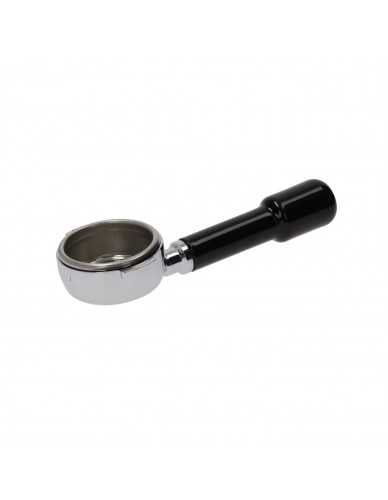
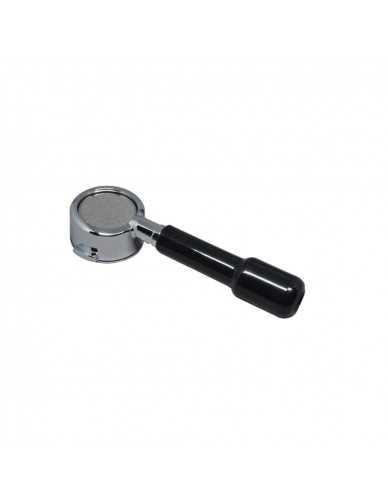
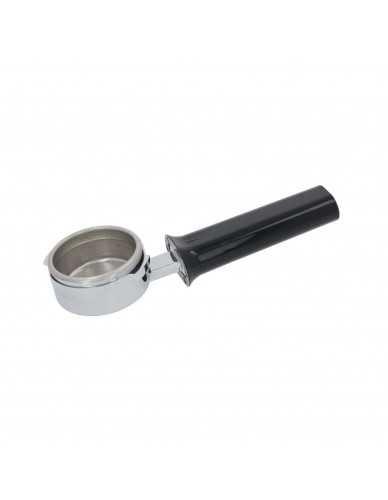
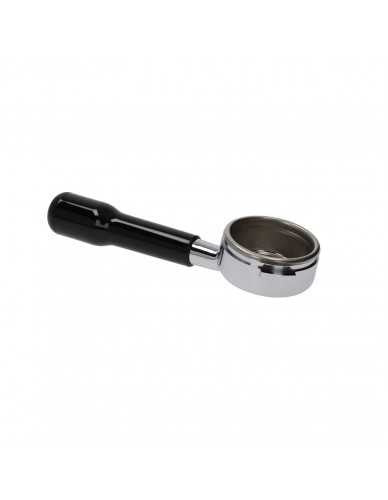
Chrome-plated bottomless portafilters can look extremely similar while using different locking systems.
Where possible, combine:
- machine manufacturer;
- exact model/version;
- OEM reference;
- brewing-group or locking system;
- number of locking lugs;
- lug orientation;
- lug thickness;
- nominal basket/group size;
- basket-body compatibility;
- included filter basket and spring;
- listed machine applications.
Cleaning and service
The open underside makes the lower portafilter body easier to access than on many conventional spouted designs. Remove the filter basket where appropriate and clean the portafilter according to the cleaner and machine manufacturer's instructions.
Do not automatically immerse the handle or decorative handle materials unless they are suitable for the chosen cleaning method.
Availability
Availability and lead time vary by bottomless portafilter, manufacturer and machine application. Use the individual product page for the current product status, supplied components and complete available technical specifications.