How to select the correct espresso machine adapter
Adapters can look very similar while having different thread sizes, genders or sealing surfaces. Check the original connection in this order:
thread standard side 1 → thread size side 1 → male or female → thread standard side 2 → thread size side 2 → male or female → fitting geometry → sealing method
Check both sides separately
An adapter has two connections, and each side must be identified independently. Do not describe a fitting only as “3/8"” or “1/4"” without checking whether that dimension belongs to the male or female side.
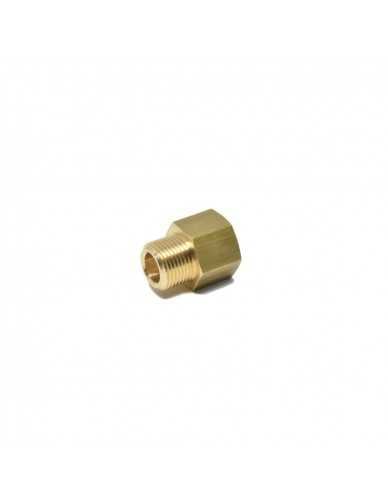
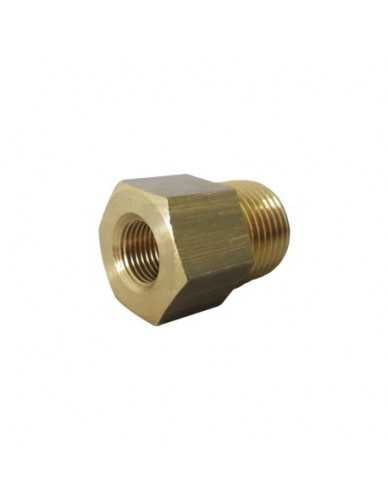
For example, a 3/8" F × 1/2" M adapter has a female 3/8" BSP-G connection and a male 1/2" BSP-G connection. The 1/2" F × 3/8" M version has the opposite configuration.
These two fittings use the same nominal sizes, but they are not interchangeable because the male and female sides are reversed.
Reducing adapters
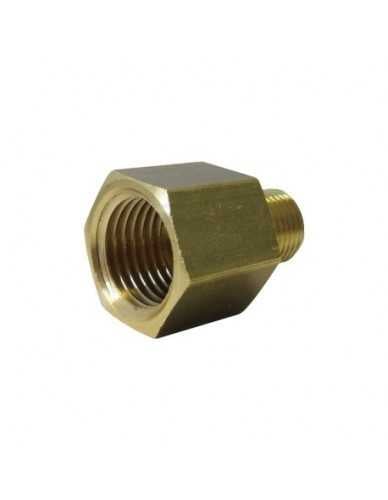
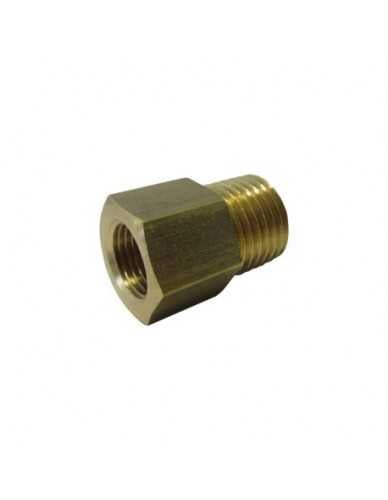
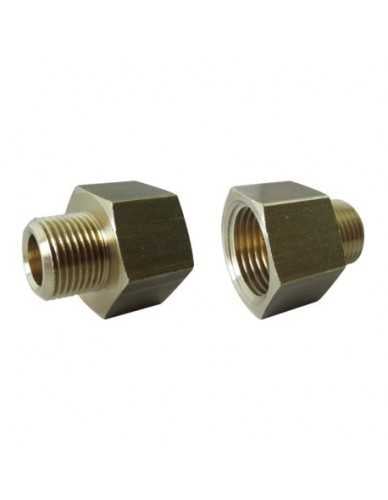
A reducing adapter connects two different nominal thread sizes. Examples in this category include 1/4" F × 1/8" M, 1/8" F × 3/8" M, 1/4" F × 3/8" M and 3/8" F × 1/2" M.
The purpose of the adapter is not simply to make a larger connection smaller. It must reproduce the correct size and thread gender on both sides.
Equal-size adapters and female-female couplings
An adapter does not always change thread size. Some fittings change only the connection configuration.
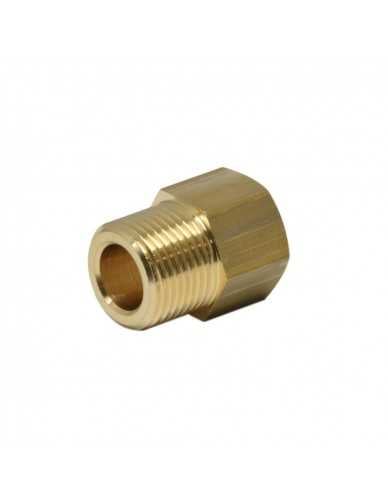
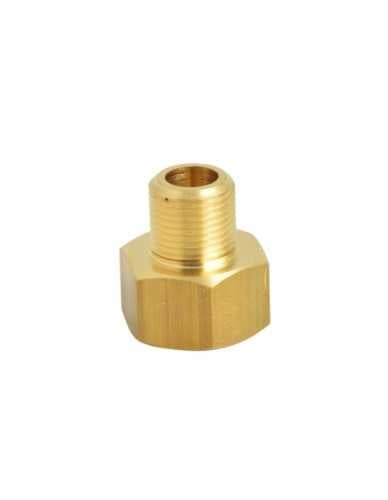
The 3/8" F × 3/8" M adapter, for example, keeps the same nominal BSP-G size but converts between a male and female connection.
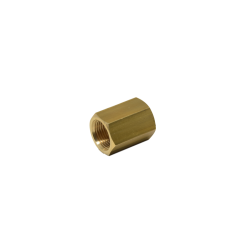
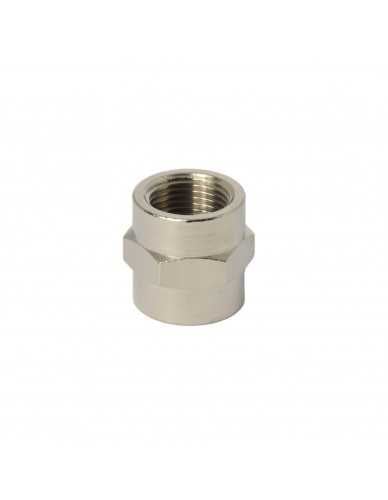
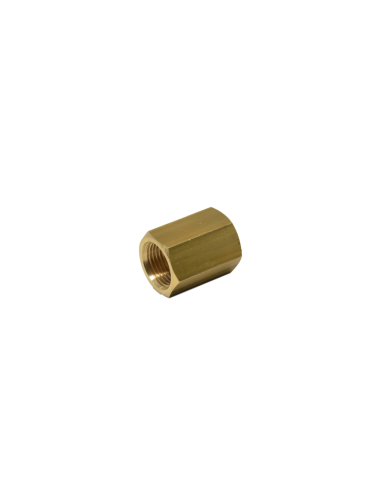
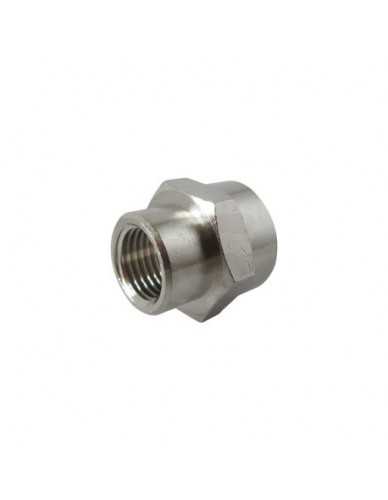
The category also contains female-female couplings such as the 3/8" BSP-G female-female coupling. These are used to join two male threaded components rather than to reduce the nominal size.
BSP-G sizes are nominal
BSP-G sizes such as 1/8", 1/4", 3/8" and 1/2" are nominal pipe-thread sizes. The measured outside diameter of a male thread is not equal to the stated inch size.
When identifying an unknown adapter, compare the original fitting, the mating components, OEM reference and machine parts diagram rather than selecting from a measured diameter alone.
BSP-G and metric threads
Most standard adapters in this category use BSP-G connections, but not every product uses BSP-G on both sides.
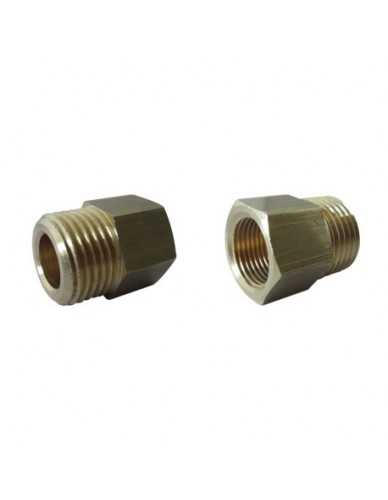
The Vibiemme Domobar fitting 1/4" F × M12 M is a good example. It combines a female 1/4" BSP-G connection with a male M12 metric thread and is used for a specific Vibiemme thermostat installation.
A metric thread should never be selected only by its measured diameter. Match the complete original specification and application.
Thread size is not the same as sealing geometry
Two connections can use the same nominal BSP-G size and still seal differently.
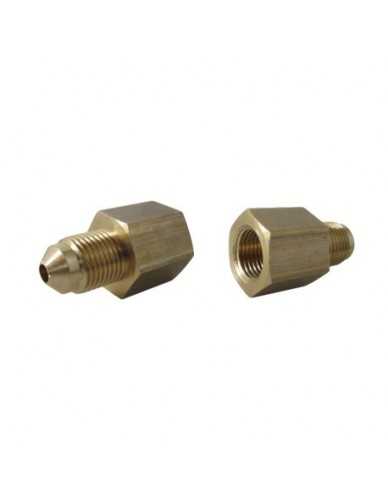
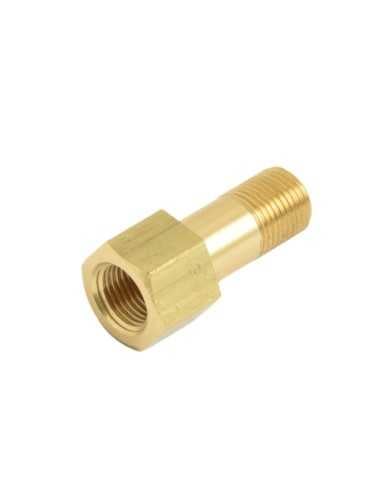
The extended 1/8" BSP-G male-female fitting is designed to transition between a conical connection and a flat connection. This is important on applications such as capillary connections, where the sealing surface can be just as important as the thread size.
For this reason, do not replace an adapter only because the thread screws into the mating part. The original sealing face, cone or seat must also match.
Flat, conical and flared connections
Some adapter applications use a flat sealing surface, while others use a cone or a connection designed for flared tubing.
The thread holds the components together, but the actual pressure seal may be created at the sealing face rather than between the thread flanks.
Before ordering, inspect the original fitting and determine whether the connection seals against a gasket, washer, flat face, cone, flare or another manufacturer-specified surface.
Do not automatically use thread sealant
BSP-G is a parallel pipe thread. Depending on the original design, the pressure seal can be made by a gasket, copper washer, machined face, cone or another dedicated sealing surface.
Do not automatically apply PTFE tape or liquid thread sealant to every BSP-G adapter. Reproduce the original sealing method.
Length and component position
Adapter length can also be important. An extended fitting can change the position of a pressure switch, capillary connection, thermostat or valve relative to the boiler and surrounding components.
If the original adapter has an extended body or a specific seating geometry, match that construction rather than replacing it with a shorter fitting that only has the same nominal threads.
Generic and OEM applications
Many brass adapters are generic hydraulic fittings and can be used by several espresso machine manufacturers. Multiple brand applications are normal when the technical specifications are identical.
Other fittings are application-specific. In those cases, use the OEM reference and machine model together with the thread specifications and geometry.
Adapter or nipple?
Use an adapter when the connection requires female-female or male-female threads, a size reduction, a change of thread system or a different sealing geometry.
Use a nipple when the original fitting is a straight male-male connection.
For branches or changes in direction, use T and elbow fittings.
Final check before ordering
Verify:
thread standard side 1 → size → male/female → thread standard side 2 → size → male/female → reducing or equal size → sealing geometry → fitting length → OEM/application
Do not select an espresso machine adapter from thread diameter or nominal size alone. Both connections and the original sealing geometry must match.