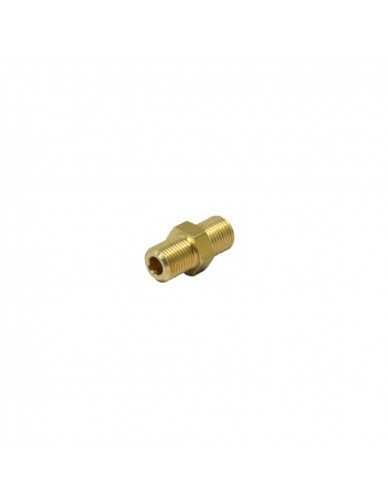
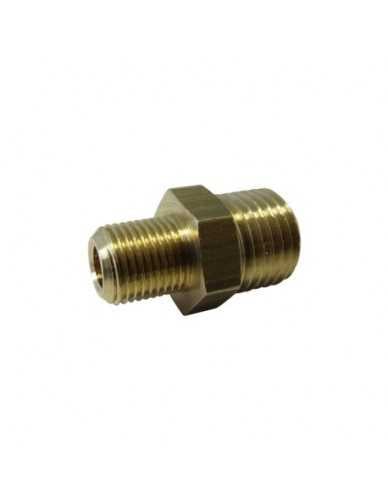
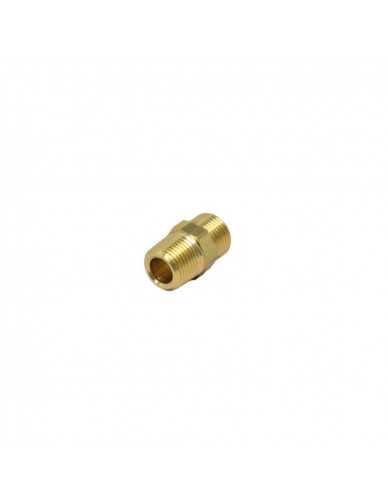
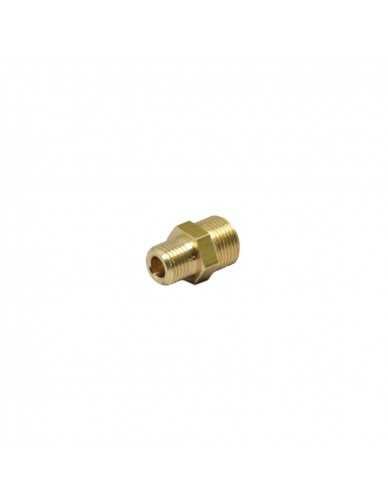
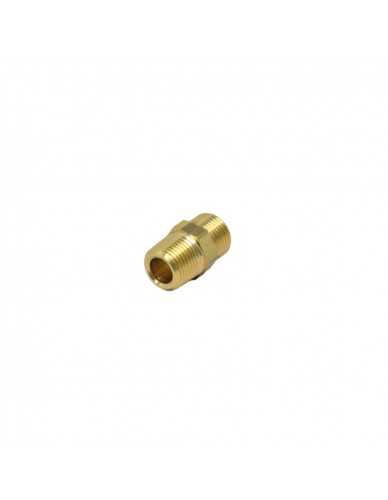
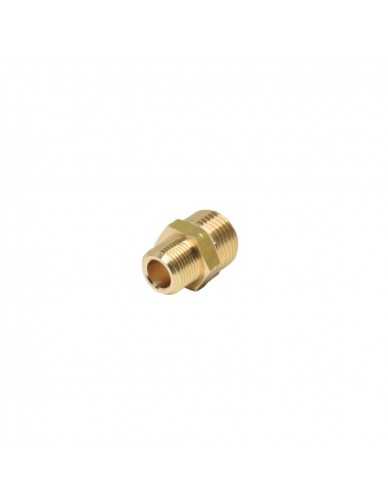
A nipple may look like a simple fitting, but similar parts are not always interchangeable. Use this order when selecting a replacement:
thread type side 1 → thread size side 1 → thread type side 2 → thread size side 2 → fitting length and geometry → sealing method
Equal and reducing nipples
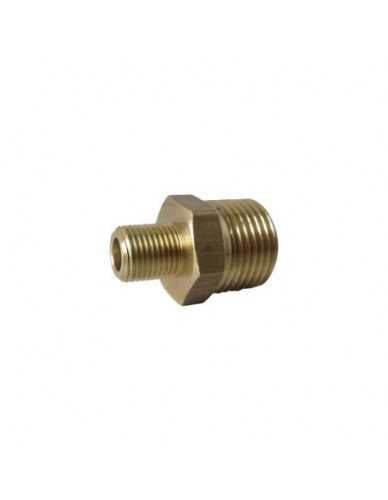
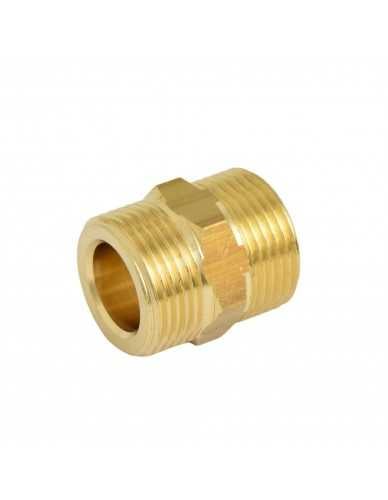
A standard nipple can have the same thread size on both ends, such as 1/4" × 1/4" or 3/8" × 3/8". A reducing nipple has male threads on both sides but connects two different sizes, for example 1/8" × 1/4" or 3/8" × 1/2".
BSP-G, NPT and metric threads
The nominal inch size does not define the complete thread specification. BSP-G is a parallel pipe thread, while NPT uses a different thread geometry and sealing method. Metric connections such as M18×1.5 use another system again.
This means that two fittings can both be described as 3/8" and still be technically incompatible. Always check the complete thread specification on both sides.
BSP-G sizes are nominal
BSP-G sizes such as 1/8", 1/4", 3/8", 1/2" and 3/4" are nominal sizes. The measured outside diameter of the male thread is therefore not the same as the stated inch size.
When identifying an unknown nipple, compare the original fitting, OEM reference, machine parts diagram and the thread specification of the mating component.
Length and geometry
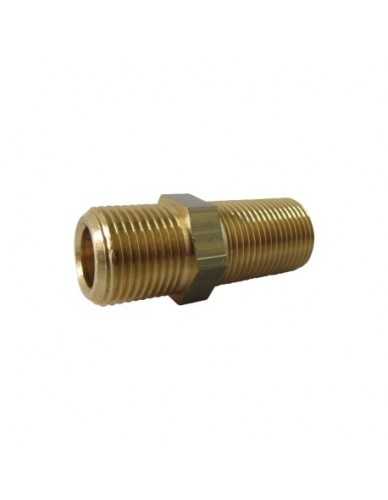
Two nipples can have the same thread size but different lengths. An extended fitting can position a valve or other component further away from the boiler or frame. Match the original fitting length and geometry whenever possible.
Sealing BSP-G connections
BSP-G is a parallel thread, so the thread itself does not always create the pressure seal. Depending on the original design, sealing may be provided by a gasket, copper washer, sealing face, cone or another specified sealing method.
Do not automatically use PTFE tape or liquid thread sealant on every BSP-G connection. Reproduce the original sealing method.
Before installation
Start the nipple by hand and make sure the thread engages smoothly. Strong resistance can indicate an incorrect size, wrong thread system or cross-threading. After installation, check the connection for leaks under operating pressure.
Generic and OEM fittings
Many brass nipples are generic hydraulic fittings used by several espresso machine manufacturers. Multiple brand applications are therefore normal when the technical specifications are identical.
For the correct replacement, focus on thread type, thread size, length, geometry and sealing method, and use the OEM reference or machine model where available.