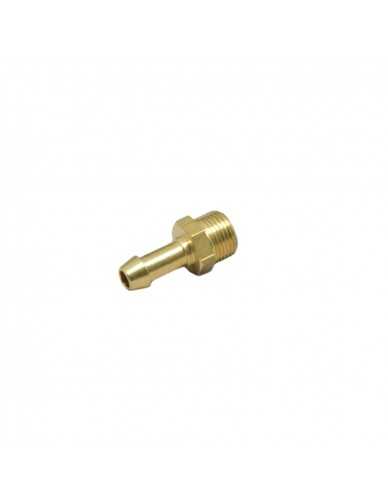
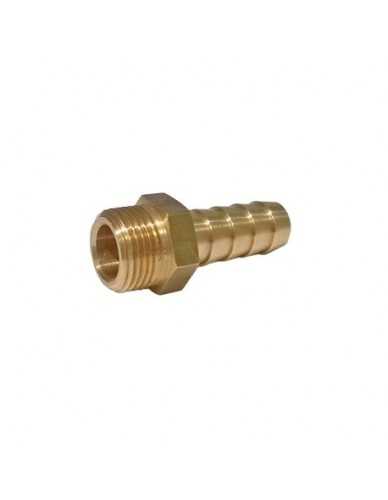
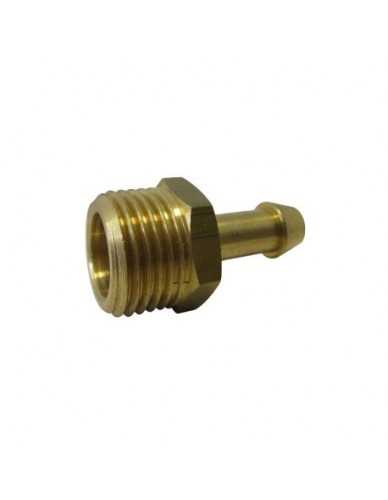
How to select the correct espresso machine hose barb
A hose barb has two different sides that must both match the original installation. Use this selection order:
application → BSP-G thread size → male or female thread → hose-end size and geometry → connection type → retaining method → sealing method
Choose the BSP-G thread size and gender first
The threaded side connects the hose fitting to a valve, boiler fitting or another hydraulic component. The products in this category use BSP-G connections in 3/8" and 1/2" sizes, with male and female versions available.
A male fitting has an external thread and screws into a female port. A female fitting has an internal thread and connects to a male threaded component. Match the configuration of the original fitting rather than selecting from diameter alone.
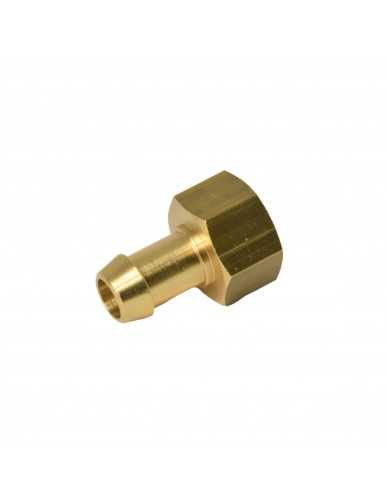
For example, the 1/2" female hose barb with a 16.5 mm maximum hose-end diameter uses a different threaded configuration from a 1/2" male fitting even when the hose side is similar.
BSP-G thread size is not the hose size
The most important distinction on this category is that BSP-G size and hose size are separate measurements.
A 3/8" BSP-G fitting does not require a 3/8" hose. The 3/8" designation describes the pipe thread on the machine side. The opposite side must be matched separately to the hose and the original barb geometry.
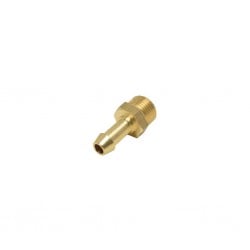
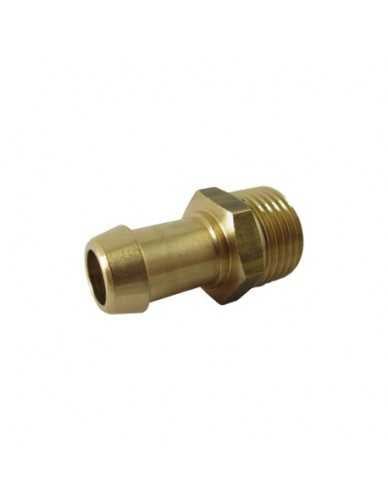
This can be seen in the product range: both the 3/8" M × 9 mm hose barb and the 3/8" M × approximately 12 mm hose barb use a 3/8" BSP-G connection, but the hose ends are different.
Match the hose to the barb geometry
Check the dimensions of the original hose and fitting before ordering. The hose must fit the barb correctly and must also be suitable for the temperature, pressure and application in that part of the machine.
Do not assume that the published outside diameter of a barb is automatically the nominal inside diameter of the hose. Where possible, compare the original hose, original fitting and manufacturer specifications together.
If the hose itself also needs replacement, see the silicone and Teflon hose category and match both the hose dimensions and application.
Standard hose barbs and conical hose connectors
Not every product in this category uses exactly the same connection principle.
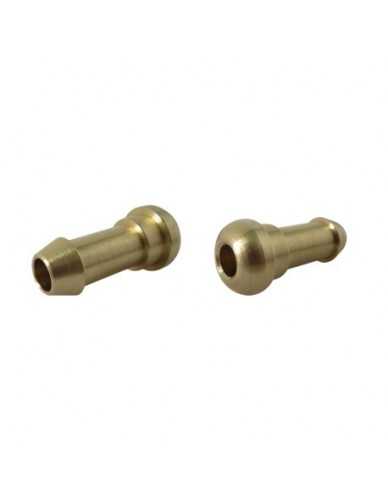
Conventional hose barbs have a shaped hose end over which the flexible hose is installed and retained. The 3/8" brass end hose connector is different: it is one part of a two-piece connection, uses a separate nut and has a conical seating surface on the connection side. Its hose end has an outside diameter of 8 mm.
Do not replace a conical two-piece hose connection with a conventional hose barb simply because both parts are described as 3/8". The original nut, seat geometry and complete connection design must match.
Securing the hose to the fitting
For conventional hose-barb installations, the hose normally needs to be secured using the retaining method specified for the original assembly, typically a correctly sized hose clamp.
The clamp should secure the hose without damaging or cutting into it. Also check that the hose is fully seated on the barb before tightening the clamp.
A conical two-piece connector uses a different retaining system, so reproduce the original construction rather than treating every product in this category as the same type of hose barb.
Sealing the threaded connection
The fittings in this category use BSP-G thread, which is a parallel pipe thread. The thread provides the mechanical connection but does not always indicate where the pressure seal is formed.
Depending on the original design, the threaded side may seal against a gasket, sealing washer, machined face or another specified sealing surface. The conical hose connector uses its own conical seating geometry.
Do not automatically apply PTFE tape or liquid thread sealant to every BSP-G fitting. Inspect the original connection and reproduce the intended sealing method.
Before installation
Check that the hose, barb and threaded connection are clean and undamaged. Start threaded fittings by hand to make sure the thread engages correctly. Unexpected resistance can indicate the wrong size, incorrect thread or cross-threading.
After installation, check that the hose cannot pull off the barb and inspect the complete connection for leaks under normal operating pressure.
Final check before ordering
For the correct replacement, verify:
BSP-G size → male or female thread → hose size → barb geometry → standard or conical connection → retaining method → sealing method
Do not select a hose barb from the BSP-G size alone. The threaded connection and the hose connection are two separate specifications and both must match the original installation.