How to find the correct Gaggia spare part
Gaggia has produced domestic espresso machines as well as larger commercial machines for cafés, restaurants and other professional applications. These machine families can use completely different brewing groups, pumps, boilers, portafilters and electronic controls.
Before ordering a replacement part, check:
- the complete Gaggia model name;
- the machine generation or production version;
- whether the machine is domestic or commercial;
- the number of brewing groups on a commercial machine;
- the machine voltage;
- the voltage and wattage of electrical components;
- the original Gaggia part number;
- the thread and connection type;
- the physical dimensions of the component;
- the position and function of the original part.
If the original part number is unavailable, compare the removed component carefully with the photographs, dimensions and technical information on the product page. Electrical, hydraulic, pressure-related and safety components should not be selected solely because they look similar.
Domestic Gaggia espresso machine parts
Our domestic Gaggia range includes parts for machines such as the Classic, Baby, New Baby and Carezza. These compact machines use components that are generally different from those fitted to large commercial Gaggia espresso machines.
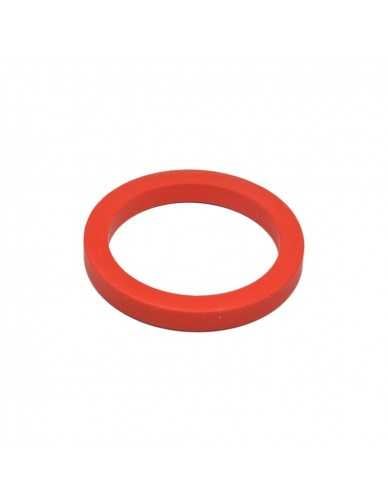
Domestic Gaggia parts in our range include brewing groups, portafilters, group gaskets, shower screens, vibration pumps, thermostats, boilers, steam components, water tanks, switches and solenoid valves.
Gaggia Classic parts
The Gaggia Classic has been produced in several generations. Components can therefore differ depending on the production period and exact version of the machine.
When selecting Gaggia Classic parts, check the generation as well as the dimensions and original part number. Do not assume that every component described as a Gaggia Classic part is suitable for every Classic generation.
Common replacement parts include:
- brewing-group and portafilter gaskets;
- shower screens;
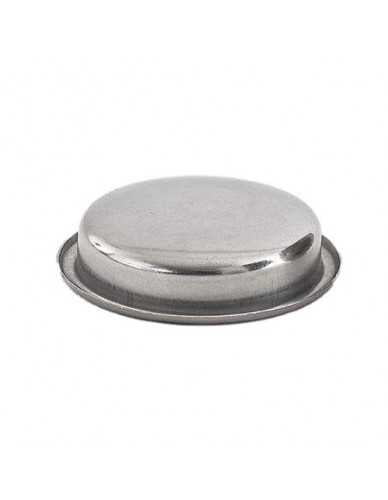
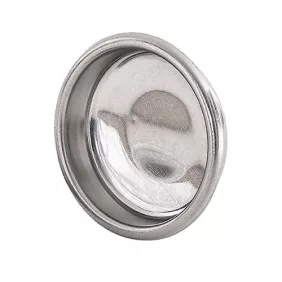
- portafilters and filter baskets;
- boiler and heating components;
- thermostats and thermal protection components;
- vibration pumps;
- solenoid valves;
- steam-valve components;
- switches and water-tank parts.
Gaggia Baby and New Baby parts
The Gaggia Baby family has also been produced in several versions. Parts can be shared between selected Baby, New Baby and Classic machines, but compatibility should always be confirmed using the model information and Gaggia part number.
Browse the available Gaggia Baby parts.
Typical service items include group gaskets, shower screens, pumps, thermostats, solenoid valves, portafilters and brewing-group components.
Gaggia Carezza and other domestic models
Some products in this category are also suitable for Gaggia Carezza and other domestic Gaggia machines. These models do not necessarily use the same boiler, brewing group, portafilter or electrical components as the Classic and Baby families.
Check the exact model and the compatibility information on the individual product page before ordering.
Commercial Gaggia espresso machine parts
Professional Gaggia machines use larger hydraulic and heating systems than domestic machines and can be produced with one, two, three or more brewing groups depending on the model.
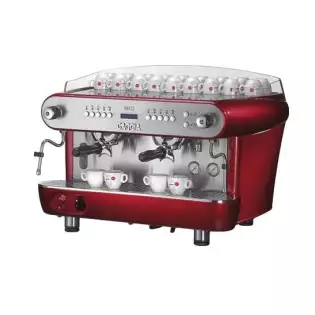
Our commercial Gaggia assortment includes parts for machines such as D90, E90, FD2000, FE2000, TD93, TE93, Tell, XD and XE. Parts for other commercial families such as Deco, GD, GE and LC/D can also be present in the general Gaggia assortment.
Gaggia D90 parts
The Gaggia D90 uses professional brewing-group, boiler, dosing and hydraulic components. Electrical components can differ according to machine voltage and the number of brewing groups.
When selecting Gaggia D90 parts, check the original Gaggia number and whether the component is intended for the correct group configuration.
Gaggia E90 parts
The E90 shares certain types of components with other professional Gaggia machines, but that does not make all parts interchangeable.
Browse the available Gaggia E90 parts and check dimensions, connections, electrical specifications and the original reference.
Gaggia FD2000 parts
The Gaggia FD2000 category contains parts for the brewing system, boiler and water circuit, including items such as gaskets, heating components, pumps, pressure controls, level components and fittings.
Browse the Gaggia FD2000 parts and use the technical product data rather than appearance alone to confirm compatibility.
Gaggia FE2000 parts
The Gaggia FE2000 uses professional components for brewing, heating, pressure control and the hydraulic circuit. Some components may also occur on related commercial Gaggia models.
Browse the Gaggia FE2000 parts and compare the original part number and machine specification.
Gaggia TD93 and TE93 parts
The TD93 and TE93 belong to older professional Gaggia machine families. Because components can differ between related versions, use the full model designation rather than only the TD or TE family name.
Gaggia Tell parts
For the Gaggia Tell, compare the original component with the listed dimensions, connections and Gaggia references before ordering.
Browse the available Gaggia Tell parts.
Gaggia XD and XE parts
The Gaggia XD and XE are professional espresso machine families that can share certain hydraulic and mechanical components while using different controls or electrical parts depending on the version.
Always check the complete model, group configuration and original Gaggia reference before substituting a component from another Gaggia commercial machine.
Brewing-group parts
Domestic and commercial Gaggia machines do not all use the same brewing-group design. A group gasket, shower screen or portafilter suitable for a commercial Gaggia machine may therefore be completely different from a component used on a Gaggia Classic or Baby.
Common group-related replacement parts include:
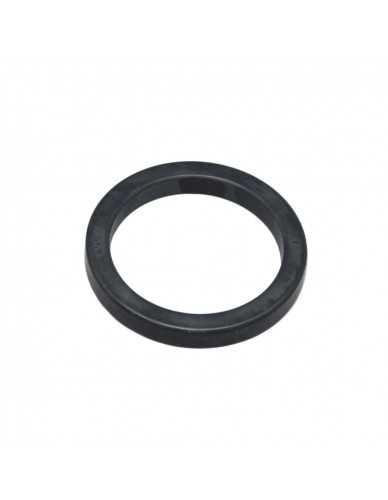
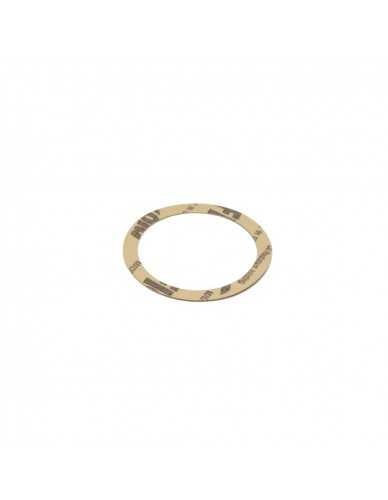
- portafilter gaskets;
- group-locking gaskets;
- shower screens;
- shower-screen holders and diffusers;
- group bodies;
- solenoid valves;
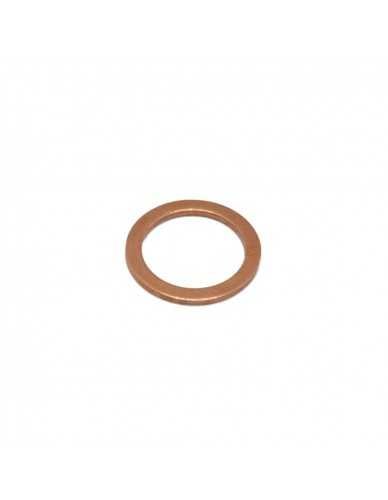
- valve seals and O-rings;
- springs, screws and fittings.
Water leaking around the portafilter is often associated with a worn group gasket, but other causes are possible. Check the portafilter, filter basket, gasket seat and group locking surfaces before replacing parts.
For general service parts, browse:
Gaggia portafilters
Gaggia has used different portafilter designs on domestic and commercial machines. Do not identify a replacement portafilter only by the basket diameter.
Check:
- the machine family;
- the diameter of the filter basket;
- the number and orientation of the locking ears;
- the thickness of the locking ears;
- the locking position in the group;
- whether the machine uses a domestic or commercial group;
- whether a single, double or bottomless portafilter is required.
A portafilter intended for a commercial Gaggia D90, XD or XE should not be assumed to fit a domestic Classic or Baby, even when the components appear similar.
Pumps and water supply
Gaggia machines use different pump systems depending on the model. Compact domestic machines commonly use vibration pumps, while professional machines can use rotary pumps with separate electric motors.
A machine that does not build pressure does not automatically need a replacement pump. Also inspect:
- the water reservoir or mains water supply;
- the inlet hose;
- the water filter where fitted;
- the pump capacitor on rotary-pump systems;
- the pump bypass or pressure adjustment;
- inlet and non-return valves;
- blockages in the hydraulic circuit;
- electrical power to the pump.
When replacing a pump, verify the voltage, frequency, inlet and outlet connections, flow direction, mounting arrangement and original part reference.
Browse our espresso machine pumps.
Boilers and heating elements
Gaggia has used very different heating systems across domestic and commercial machines. A compact domestic boiler should not be compared directly with the large heating systems used on multi-group commercial machines.
Before ordering a boiler or heating component, check:
- the complete machine model and generation;
- the machine voltage;
- the heating-element voltage and wattage;
- the boiler dimensions;
- the flange or thread dimensions;
- the immersed length of the element;
- the number and position of electrical terminals;
- the original Gaggia part number.
If a machine does not heat, the heating element or boiler is not necessarily defective. Depending on the machine, also check thermostats, pressure switches, temperature sensors, contactors, relays, control boards and wiring.
Browse our espresso machine heating elements.
Steam and hot-water valves
Steam- and hot-water systems contain wear components such as valve shafts, seals, O-rings, springs, bushes, handles and steam tubes.
A valve that leaks while closed may have a worn gasket or sealing seat. A valve that is difficult to operate can also be affected by scale, contamination, shaft wear or incorrect assembly.
Gaggia has used different valve designs across its domestic and commercial machines. Compare the thread sizes, valve body, shaft dimensions and original part number.
Browse our steam valves and steam-valve parts.
Solenoid valves
Gaggia machines can use solenoid valves for brewing-group control, automatic boiler filling and other hydraulic functions.
Before replacing a solenoid valve, check:
- the coil voltage;
- whether the valve is two-way or three-way;
- the flange or threaded connection;
- the inlet and outlet configuration;
- the flow direction;
- the valve function in the machine;
- the original Gaggia part number.
A valve that does not open or close correctly does not automatically require a new coil. Scale, debris, a blocked valve core or an electrical fault can cause similar symptoms.
Browse our espresso machine solenoid valves.
Automatic boiler filling and level control
Many professional Gaggia machines use automatic boiler-level control. The system can include a level probe, electronic level regulator, inlet solenoid valve and related wiring.
If the boiler does not fill, overfills or fills intermittently, check the complete circuit before replacing the electronic controller.
Possible causes include:
- scale or contamination on the level probe;
- a loose electrical connection;
- a blocked water inlet;
- a defective inlet solenoid valve;
- a faulty level regulator;
- an interrupted mains water supply;
- poor electrical grounding or probe contact.
Pressure switches and pressure gauges
Professional Gaggia machines can use pressure switches to control boiler heating and gauges to display boiler and pump pressure.
When selecting a pressure switch, check:
- the pressure range;
- the electrical rating;
- single- or multi-phase application;
- the thread connection;
- the original Gaggia reference.
For a pressure gauge, compare the pressure scale, dial diameter, capillary or pipe connection, fitting position and mounting dimensions.
A similar-looking gauge or pressure switch is not automatically suitable for the machine.
Dosing devices, flowmeters and electronic controls
Commercial Gaggia machines with volumetric dosing can use flowmeters, dosing devices, touch panels and electronic control units to regulate the brewing cycle.
When replacing an electronic control component, check:
- the complete part number;
- the supply voltage;
- the number of brewing groups;
- the connector arrangement;
- the machine model;
- the production version.
A dosing unit intended for a two- or three-group machine may differ from the controller fitted to another configuration of the same model.
Browse our espresso machine dosing devices.
Sight glasses and boiler water level
Older professional Gaggia machines can use a sight glass to show the water level inside the steam boiler. A complete sight-glass assembly can include the glass tube, upper and lower fittings, seals, washers and protective components.
When replacing a sight-glass component, check the tube diameter and length, fitting dimensions and sealing components. Do not reuse hardened or damaged sight-glass seals simply because they appear intact.
Work on a boiler sight glass only after the machine has been disconnected, cooled completely and fully depressurised.
Original and compatible Gaggia parts
This category contains original Gaggia components as well as compatible replacement parts made by other manufacturers.
An original part is supplied according to a Gaggia specification or original part reference. A compatible component is intended as an alternative for one or more stated original references.
Compatible does not mean that the part is suitable for every Gaggia machine. Always verify:
- the original Gaggia part number;
- the listed models;
- the machine generation;
- the dimensions;
- the material;
- the voltage and wattage;
- the hydraulic or electrical configuration.
For gaskets, O-rings, springs and other simple mechanical wear parts, a compatible component can be a suitable alternative when all relevant specifications match. Electrical, boiler, pressure and safety-related components require particularly careful verification.
Shared parts between Gaggia models
Some components are used on several Gaggia machines. This is common with certain gaskets, pumps, solenoid valves, fittings, thermostats, pressure switches and commercial hydraulic components.
Shared use does not mean that all components from the same model family are interchangeable. Always compare the individual product specification.
Where a product page lists several Gaggia models or original part numbers, use those references together with the technical dimensions to confirm suitability.
Domestic and commercial Gaggia parts are different
The distinction between domestic and professional Gaggia machines is particularly important when ordering parts.
A domestic machine such as a Baby or Classic typically uses a compact hydraulic and heating system. Professional machines such as the D90, E90, FD2000, FE2000, XD and XE can use larger boilers, rotary pumps, commercial valves, automatic level control and multi-group electronics.
Do not substitute a professional Gaggia component with a domestic part, or vice versa, simply because both components carry the Gaggia name.
Identifying your Gaggia machine
The model name is the first step, but it is not always enough to identify the correct part. Some Gaggia names have been used for more than one production version.
Useful identification information includes:
- the complete model name on the machine;
- the serial number;
- the production date where available;
- the voltage shown on the rating plate;
- the number of brewing groups;
- the code printed on the original component;
- photographs of the electrical and hydraulic connections.
This is especially important for Gaggia Classic and Baby generations and for older commercial Gaggia machines where components may have changed during production.
Cleaning and preventive maintenance
Regular maintenance helps keep the brewing group, valves, steam system and water circuit in good condition.
Typical maintenance includes:
- cleaning the brewing group and shower screen;
- removing coffee residue around the group gasket;
- cleaning the steam tube after use;
- checking hoses and fittings for leakage;
- inspecting valve seals and O-rings;
- checking the condition of boiler and pump connections;
- monitoring water quality and scale formation.
Do not descale a Gaggia machine automatically according to a fixed schedule without considering the machine design and the water being used. Incorrect descaling can release deposits that subsequently block valves, jets, flowmeters or pipes.
Cannot find the correct Gaggia part?
Record the complete Gaggia model name, production version and serial number. Also note every number printed or stamped on the original component.
Clear photographs can help distinguish between similar parts. Include photographs of:
- the complete component;
- all electrical or hydraulic connections;
- labels and part numbers;
- mounting points;
- the position in which the part is installed.
For additional components, browse our complete range of espresso machine parts.