
Espresso machine pressure switches & sensors
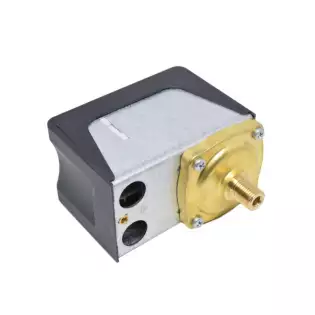
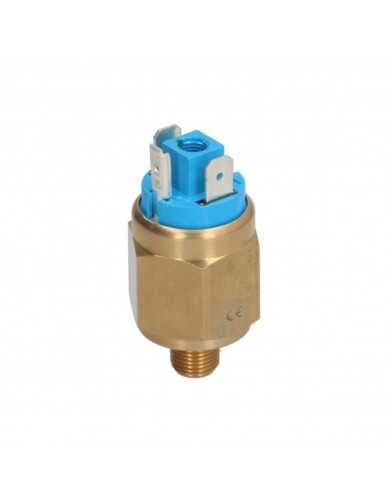
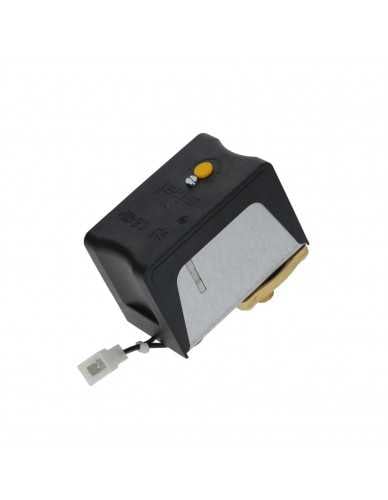
Rancilio Classe 5 Asco pressure switch P302/6

Nuova Simonelli 3 pole pressure switch 30A 400V original
Asco/Sirai P302/6 Membrane rebuild kit
How to identify the correct espresso machine pressure switch or sensor
Pressure-control components can look similar while having different hydraulic and electrical specifications. A matching pressure range does not prove compatibility, and products from the same pressure-switch family can still have different settings, fittings or electrical ratings.
Where possible, compare replacements in this order:
machine manufacturer → exact model/version → OEM reference → device type → pressure specification → hydraulic connection → electrical specification → manufacturer reference → listed application
1. Start with the machine and OEM reference
The machine manufacturer and exact model are normally the strongest starting points. Use espresso machine parts by brand and model to narrow the selection before comparing individual pressure switches or sensors.
Do not assume that one espresso-machine brand uses the same pressure-control component throughout its range. Different models can use mechanical pressure switches, electronic pressure sensors or different versions of the same switch family.
If an OEM reference is available from the original component, exploded view or service documentation, use it together with the technical specifications.
What is the difference between a pressure switch and a pressure sensor?
A mechanical pressure switch and an electronic pressure sensor both respond to pressure, but they work differently and belong to different control architectures.
Mechanical pressure switches
A mechanical pressure switch uses boiler pressure to move a diaphragm or similar mechanism. At the switching point, electrical contacts change state. Depending on the espresso-machine circuit, the pressure switch may control the heating load directly or operate through another switching component such as a contactor or relay.
Mechanical pressure switches therefore need both a correct hydraulic specification and a correct electrical specification.
Pressure sensors and transducers
A pressure sensor or pressure transducer measures pressure and provides an electrical signal to an electronic controller. It should not be treated as a more precise version of a mechanical pressure switch; the operating principle and machine control system are different.
For a pressure sensor, compare the pressure measurement range, hydraulic connection, electrical connector or cable and the exact machine/OEM application. Supply and output specifications should also be compared whenever they are documented by the manufacturer.
Pressure range, setpoint and differential are different specifications
Pressure-switch specifications can contain several pressure values that describe different things. Do not combine them into one generic “pressure” value.
Adjustable pressure range
The adjustable range describes the range within which a mechanical pressure switch is designed to be set. For example, the Ma-Ter XP110 pressure switch has an adjustable range of 0.5–1.5 bar.
Factory preset or setpoint
The preset or setpoint is the pressure setting at which a particular switch is supplied or intended to operate in its stated application. The XP110 example above is supplied preset at 1.0 bar.
An adjustable range does not mean that any pressure within that range is automatically correct for the espresso machine. Use the original machine specification and OEM application as the reference.
Differential or hysteresis
Differential, also called hysteresis in some technical contexts, describes the pressure difference between switching states. It is separate from the adjustable pressure range.
For example, the Asco (formerly Sirai) P302/6 pressure switch has an adjustable range of 0.5–1.4 bar and a specified fixed differential of 0.15 ± 0.06 bar.
Therefore:
adjustable range ≠ preset/setpoint ≠ differential
Do not replace a pressure switch from bar range alone
Two pressure switches can have similar operating ranges while using different:
- thread connections;
- factory settings;
- differentials;
- number of electrical poles;
- current ratings;
- voltage or load ratings;
- terminal arrangements;
- machine applications.
Even two switches from the same product family are not automatically interchangeable. Compare the complete manufacturer reference and OEM application rather than relying only on the model-family name.
Pressure-switch hydraulic connections
The hydraulic connection is part of the fit specification. Identify the complete connection rather than using a description such as “1/4 inch” on its own.
For each connection, compare:
- thread standard;
- nominal thread size;
- male or female connection;
- sealing geometry;
- additional tube connection where used.
Common components in this category use connections such as 1/8", 1/4" and 3/8", but equal nominal sizes do not automatically mean equal connection or sealing requirements.
BSP-G nominal size is not measured thread diameter
BSP-G is a parallel pipe-thread standard. Its nominal size is not the same as the outside diameter measured across the male thread. Do not identify a pressure switch or sensor by measured thread diameter alone.
If an adapter or hydraulic connection needs to be replaced, use the espresso machine fittings category and compare thread standard, nominal size, gender and sealing geometry.
Follow the original sealing method
Do not automatically apply PTFE tape or another thread sealant to every pressure-switch connection. Determine how the original connection is designed to seal. Depending on the fitting, sealing can occur at a dedicated seat, gasket or other sealing surface rather than in the thread itself.
1/4 inch is not automatically better than 1/8 inch
Thread size is a compatibility specification, not a quality ranking. A pressure switch with a 1/4" connection is not an upgrade for a machine designed around a 1/8" connection unless the complete installation is specifically designed for it.
Follow the original hydraulic configuration or confirmed OEM replacement specification.
Electrical specifications of mechanical pressure switches
A mechanical pressure switch is also an electrical switching component. Pressure and fitting specifications alone are therefore not enough to select a replacement.
Depending on the design, compare:
- number of poles;
- rated current;
- rated voltage and load specification;
- contact configuration;
- terminal arrangement;
- whether the machine switches the heating load directly or through a contactor or relay.
Do not calculate compatibility from current rating or heater wattage alone. The complete electrical circuit and the manufacturer's stated switching specification must match the application.
Example: Ma-Ter XP110
The Ma-Ter XP110 with Brooks reference 49-120-L-1320012 has a 0.5–1.5 bar adjustable range, a 1.0 bar preset, a male 1/4" BSP-G connection and a stated rating of 15 A at 125/250 V. Ma-Ter references include XP7N2941.000 and XP7N2941.010.
This combination of pressure, hydraulic and electrical data is more useful for identification than “XP110” or “1/4 inch” alone.
Example: Asco (Sirai) P302/6
The Asco P302/6, historically also known under the Sirai brand, is a different mechanical design. Brooks reference 49-015 uses three poles, has a maximum stated current of 30 A, an adjustable range of 0.5–1.4 bar, a specified differential of 0.15 ± 0.06 bar and an ISO 228 G 1/4" male connection for Ø4×6 mm pipe.
The XP110 and P302/6 can therefore overlap in boiler-pressure applications while still being electrically and mechanically different components.
Pressure sensors require a different selection method
With an electronic pressure sensor, do not use mechanical pressure-switch criteria such as pole count as the main identifier. Instead compare the sensor measurement range, thread connection, electrical interface and machine-control application.
Example: Rancilio 2T85 pressure sensor
The Rancilio pressure sensor with Brooks reference 49-007-L-5031294 and Rancilio reference 34200288 is a 2T85 sensor with a 0–4 bar measurement range, a male 3/8" BSP-G connection and a three-core cable approximately 1000 mm long.
It is listed for Rancilio applications including Epoca and Classe 7, 8, 9 and 10 machines. A mechanical 0–4 bar pressure switch would therefore not be an equivalent replacement simply because the nominal pressure range appears similar.
Pressure switch, manometer and pressure sensor: what is the difference?
These components are related to pressure but perform different jobs:
- Pressure gauge / manometer — displays pressure to the user or technician;
- Mechanical pressure switch — changes electrical contact state in response to pressure;
- Pressure sensor / transducer — measures pressure and sends an electrical signal to an electronic controller.
For pressure display components, see espresso machine pressure gauges and manometers.
Pressure switches and the heating-control circuit
In machines using a mechanical pressure switch for boiler control, the pressure switch forms part of the heating-control system. The exact electrical architecture varies by machine.
Depending on the design, related components can include the heating element, a contactor, relay or another electrical control component.
Other espresso machines use electronic temperature or pressure-control systems. For machines using temperature-based electronic regulation, see the PID controller category.
Do not assume that a pressure switch directly carries the full heating-element load in every espresso machine. Follow the original wiring diagram and machine-specific configuration.
Complete pressure-switch assemblies, kits and service parts
Not every product associated with a pressure switch is an individual standalone switch. Some machines use complete assemblies or kits that combine a pressure-control component with wiring, relays, safety components or mounting hardware.
Individual service parts such as diaphragms or brackets can also belong to a pressure-switch assembly without being pressure switches themselves.
When replacing an assembly, identify whether the original part is:
- a complete mechanical pressure switch;
- an electronic pressure sensor;
- a combined pressure-switch assembly;
- a machine-specific pressure-switch kit;
- an individual service or mounting part.
Do not replace a complete assembly with a standalone pressure switch merely because one component within the assembly looks similar.
OEM and compatible pressure switches
An OEM/original component is supplied under, or directly corresponds to, the original machine manufacturer's reference. A compatible pressure switch or sensor is supplied as an alternative for the same confirmed application.
Compatible does not mean universal. The replacement must still match the required pressure specification, hydraulic connection, electrical specification and machine application.
Where available, compare both the espresso-machine OEM reference and the component manufacturer's own reference.
Component manufacturer and espresso-machine manufacturer are not always the same
Espresso-machine manufacturers often use pressure-control components produced by specialist suppliers. Brands such as Ma-Ter and Asco can therefore appear in machines from several different espresso-machine manufacturers.
Distinguish between:
- espresso-machine manufacturer;
- compatible machine/model;
- pressure-switch or sensor manufacturer;
- machine OEM reference;
- component-manufacturer reference;
- Brooks reference.
Asco components may also be encountered under the historical Sirai name. The manufacturer's model reference remains an important identifier when comparing replacements.
Shared applications across different espresso-machine brands
A mechanical pressure switch can legitimately be listed for several espresso-machine brands when those machines use the same technical component or corresponding OEM references.
Cross-brand application is therefore not automatically a data error. The important point is that pressure range, setting, connection, electrical characteristics and confirmed applications correspond.
Conversely, two visually identical pressure switches are not automatically interchangeable just because they share the same manufacturer or housing design.
Do not identify a pressure switch from appearance alone
Pressure switches and sensors can look very similar while differing in critical specifications. Use product photographs only as an additional visual check.
Where possible, combine:
- machine manufacturer;
- exact model and version;
- OEM reference;
- mechanical switch, sensor or assembly type;
- adjustable range or sensor measurement range;
- factory setpoint where specified;
- differential where specified;
- thread standard and nominal size;
- male/female configuration;
- sealing geometry;
- number of poles for mechanical switches;
- current and voltage/load rating;
- electrical connector or cable for sensors;
- component-manufacturer reference;
- listed machine compatibility.
Availability
Availability and lead time vary by pressure switch, sensor, manufacturer and machine application. Use the individual product page for the current product status and the complete technical specification rather than assuming one general delivery time for the category.