How to choose the correct espresso machine fitting
Espresso machines contain fittings in the water inlet, pump circuit, boiler, brewing group, pressure-control system, steam valve and hot-water circuit. A fitting can connect two threaded components, reduce one connection size to another, divide the water flow or connect a rigid tube or flexible hose.
Before ordering, check:
- the function and installation position of the fitting;
- the thread standard on each connection;
- the nominal thread size;
- whether each connection is male or female;
- whether the thread is parallel or tapered;
- the tube outside diameter or hose inside diameter;
- the required sealing method;
- the fitting length, hex size and available installation space;
- the material and surface treatment;
- the original machine or component part number.
Do not identify a fitting only by measuring the outside diameter of its thread. Pipe-thread designations are nominal sizes and do not correspond directly to the measured outside diameter.
BSP, NPT and metric threads
Many European espresso machines use parallel G threads, commonly described in the parts trade as BSP-G or BSPP. Common nominal sizes include 1/8", 1/4", 3/8" and 1/2". The complete specification should include the thread standard, size and connection type, for example G 1/4 male or G 3/8 female.
A parallel G thread normally provides the mechanical connection. Depending on the design, the pressure seal may be formed by a flat gasket, copper washer, O-ring, conical seat or another sealing surface outside the thread.
NPT is a separate American pipe-thread system. An NPT fitting should not be installed in a BSP connection simply because both parts are marked with the same nominal inch size. Their thread form and pitch can differ, and forcing them together can damage both components or produce an unreliable seal.
Metric threads also occur on some espresso-machine components. A designation such as M18x1.5 specifies a nominal diameter of 18 mm and a pitch of 1.5 mm. Never substitute a metric fitting with a BSP or NPT fitting without a correctly specified adapter.
Check every connection separately
An adapter, nipple, elbow or T-piece can have two or three different connections. Check every side individually. For example, a fitting may have a G 1/4 male connection on one side and a G 3/8 female connection on the other.
When comparing a multi-connection fitting, record:
- connection A: standard, size and male or female;
- connection B: standard, size and male or female;
- connection C where applicable;
- the orientation of elbows or branch connections;
- the overall length and available tool clearance.
This is particularly important for T-pieces and elbows. Two fittings can have identical thread sizes but differ in branch direction, centre-to-centre dimensions or installation clearance.
Adapters and reducing fittings
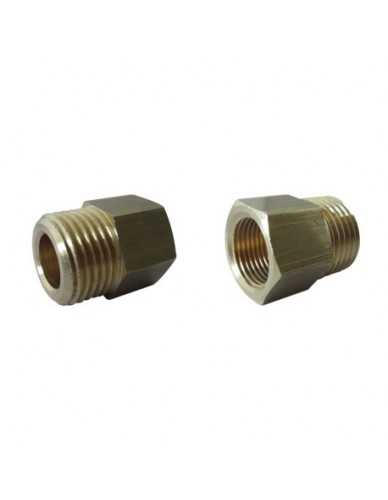
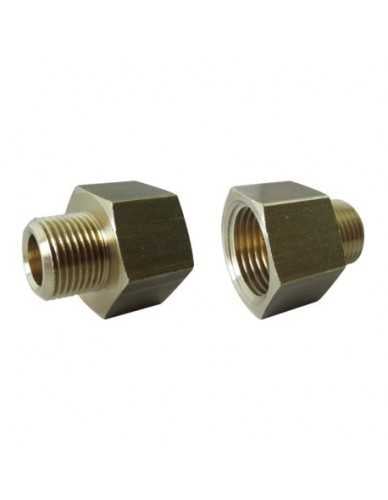
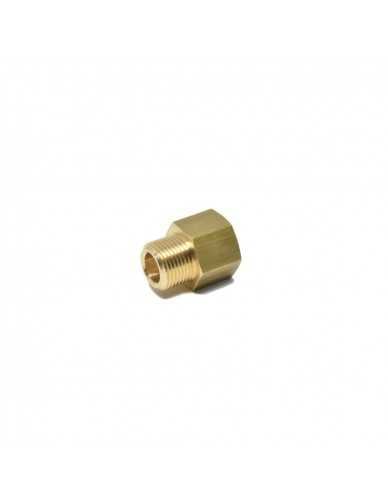
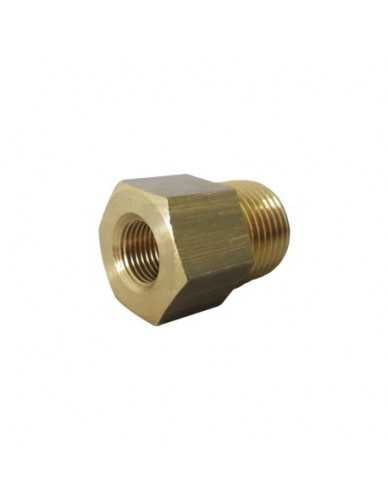
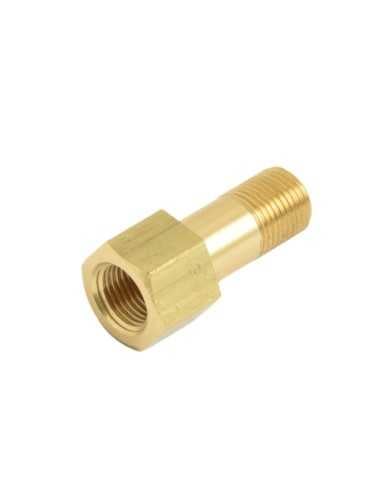
An adapter is used when the components on either side do not have the same connection. This may be necessary when installing a pressure switch, pump, valve, manometer or another replacement component with a different thread size or connection type.
Use the espresso machine adapter category for female-to-male, female-to-female and reducing connections. Check that the adapter provides the required conversion rather than merely appearing to fit both components.
An adapter should not be used to force incompatible thread standards together. Where one side is BSP and the other is NPT or metric, the product specification must explicitly state that conversion.
Nipples and reducing nipples
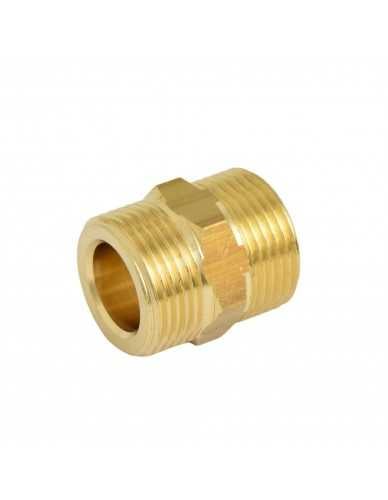
A nipple generally has an external male thread on both ends. A straight nipple connects two female ports of the same size, while a reducing nipple connects two different sizes.
When selecting a nipple, compare:
- both thread standards and sizes;
- the length of each threaded section;
- the centre hex or tool surface;
- the internal flow diameter;
- the overall fitting length.
Browse the available espresso machine nipples and reducing nipples.
Plugs and blanking fittings
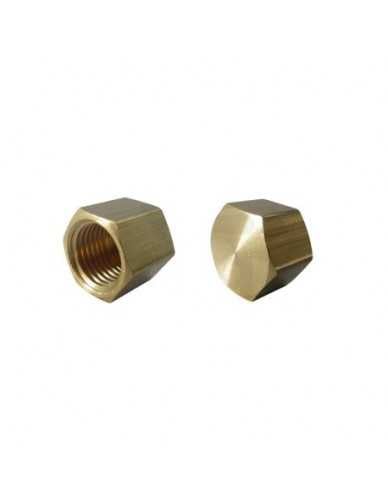
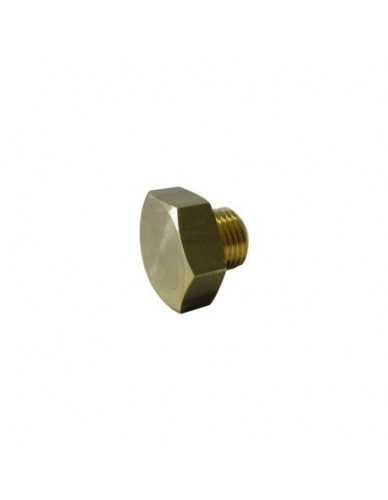
Plugs are used to close an unused port in a valve, boiler, pump circuit or other hydraulic component. Male plugs screw into female ports, while female caps or plugs close a male connection.
The correct sealing method depends on the design of the port and plug. Do not automatically apply PTFE tape or thread sealant to every plug. A parallel connection may instead require a copper washer, fibre gasket, O-ring or machined sealing face.
View the available male and female espresso machine plugs.
T-pieces and elbow fittings
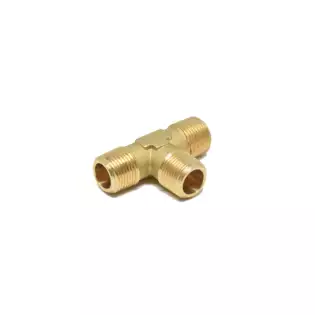
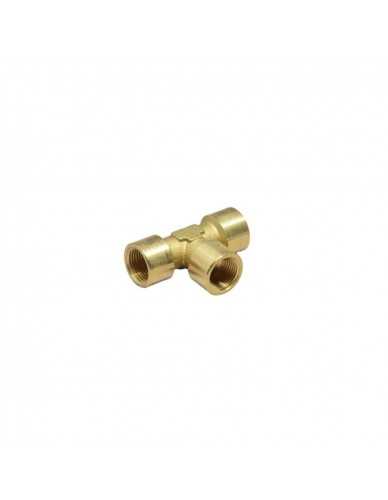
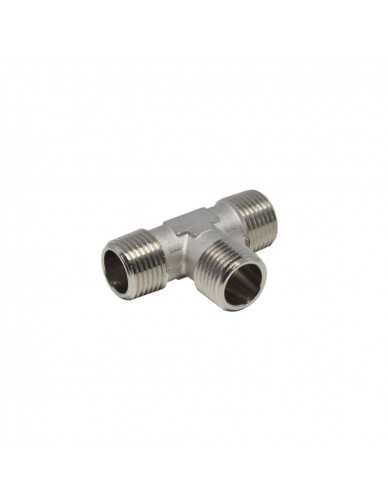
A T-piece divides or combines the water flow through three connections. Elbow fittings change the direction of a pipe or hose where there is insufficient space for a straight connection.
These fittings are used in applications such as:
- boiler-pressure and manometer circuits;
- pump and water-inlet connections;
- level-control systems;
- steam- and hot-water circuits;
- brewing-group supply lines.
Check all connections and the physical orientation of the fitting. A T-piece with the correct threads can still be unsuitable if the branch faces the wrong direction or if there is insufficient space for the adjoining pipe or component.
Browse our T-pieces and elbow fittings.
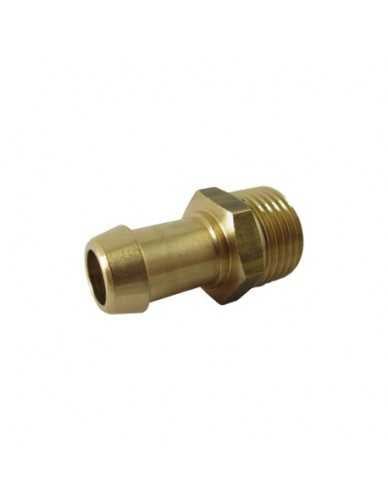
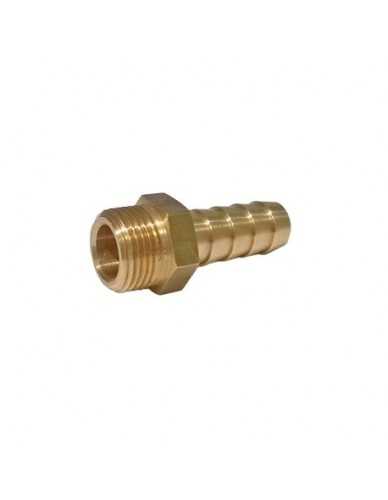
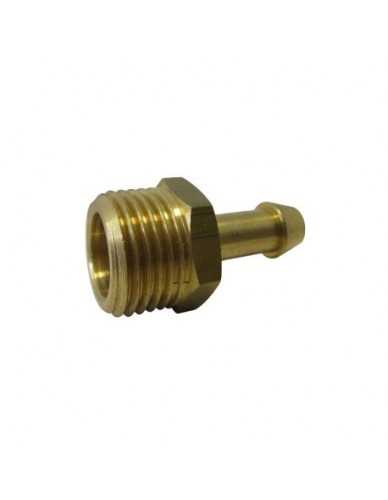
Hose barb fittings
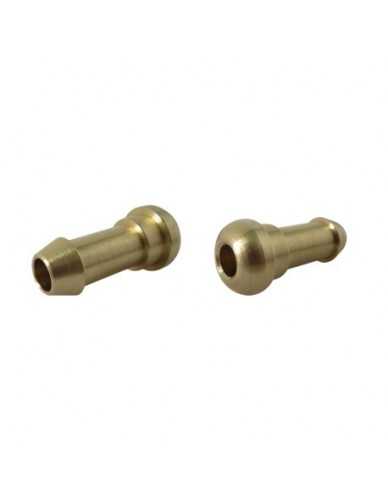
A hose barb connects a flexible hose to a threaded valve, pump, fitting or water inlet. The threaded side and the hose side must both match the application.
For the hose connection, check:
- the inside diameter of the hose;
- the outside diameter and profile of the barb;
- the hose material;
- the working temperature and pressure;
- whether a clamp or retaining clip is required.
A hose that can be pushed onto a barb is not automatically a safe fit. It must grip the barb correctly and be suitable for the temperature, pressure and water-contact application.
View the available espresso machine hose barb fittings.
Copper tubing for espresso machines
Copper tubing is commonly used for rigid water, steam and pressure-control lines inside espresso machines. Select the tube by its outside diameter and wall thickness, not by visual comparison alone.
Common dimensions in this assortment include tubes with outside diameters such as 4, 6, 8, 10 and 12 mm. Always verify the actual specification on the product page.
Before replacing a copper pipe, compare:
- the outside diameter;
- the wall thickness and inside diameter;
- the total length;
- the number and radius of the bends;
- the end fittings or welding caps;
- the original routing through the machine.
A pipe with a pinhole, deep corrosion, severe deformation or cracking should normally be replaced rather than treated as a permanent patch repair. The new pipe must be formed without flattening or sharply kinking the tube.
Browse our copper tubing for espresso machines.
Welding caps, solder fittings and nuts
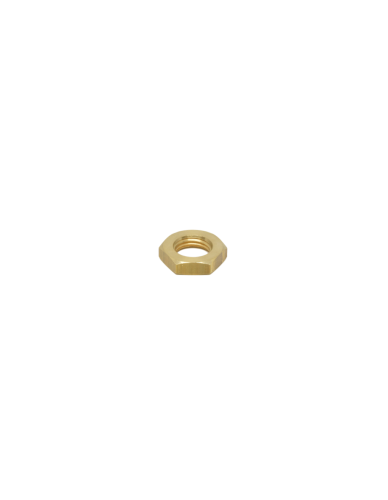
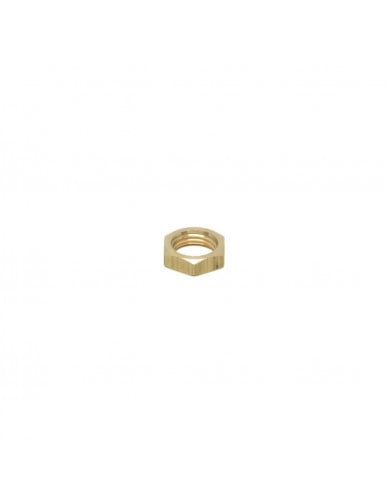
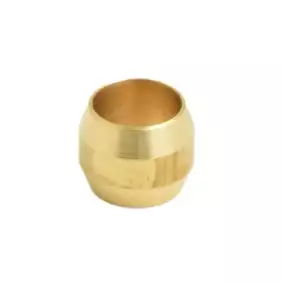
Welding or soldering caps are attached to the end of copper tubing and are used together with a matching nut and conical or shaped sealing surface. Tightening the nut presses the cap against its mating surface to form the connection.
The cap, nut and tube must be selected as a complete system. Check:
- the outside diameter of the copper tube;
- the central opening in the nut;
- the nut thread size;
- the shape and diameter of the cap;
- the sealing surface on the mating component.
A nut with the correct thread size may still be unsuitable when its central opening does not correspond with the tube or cap. Do not combine caps and nuts solely because the thread can be tightened.
Browse:
Joining and forming copper tubing requires appropriate tools and experience. An incorrectly heated, contaminated or poorly formed connection can leak under temperature and pressure.
Sealing a fitting correctly
The correct sealing method is determined by the design of the fitting and mating component. Possible systems include:
- a flat fibre or PTFE gasket;
- a crushable copper washer;
- an O-ring in a machined groove;
- a conical metal-to-metal sealing surface;
- a welding or soldering cap;
- a tapered pipe thread with a suitable sealing product.
Do not assume that leakage is caused by insufficient tightening. Excessive force can damage brass threads, distort a washer, split a fitting or damage the component into which it is installed.
Inspect both sealing surfaces and replace a compressed, cracked, hardened or otherwise damaged gasket. Use only a sealing product that is suitable for the thread design, material, temperature, pressure and intended water-circuit application.
Brass, nickel-plated brass and other finishes
Many espresso-machine fittings are manufactured from brass because it can be machined into compact and detailed components. Other products may be nickel plated or have another surface treatment.
The material name alone does not establish whether a component is suitable for every application. Check the stated material, surface treatment and intended use on the individual product page.
A surface treatment can help limit discolouration or interaction with the surrounding environment, but it does not make a fitting immune to wear, aggressive chemicals, mechanical damage or incorrect descaling.
Do not use a fitting in a drinking-water or steam circuit when its material or intended application cannot be established.
Generic fittings and model-specific parts
Many fittings in this category are generic components used by several espresso-machine manufacturers. Compatibility still depends on the complete technical specification and not simply on the brand list.
A generic fitting may be suitable when all of the following correspond:
- thread standard and size;
- male or female connection;
- sealing method;
- internal flow diameter;
- material and surface treatment;
- temperature and pressure requirements;
- installation dimensions.
Where an original part number is listed, use it as an additional compatibility check. Do not select a safety-, pressure- or boiler-related component only because it is described as universal.
General fittings and boiler-specific components
This category is intended mainly for general adapters, nipples, plugs, hose barbs, T-pieces, elbows, nuts, welding caps and copper tubing.
Model-specific boiler components such as heat exchangers, injector tubes, dedicated boiler fittings and related boiler seals can be found in the separate category for espresso machine boiler fittings and tubes.
Keeping these categories separate helps distinguish generic connection hardware from components whose shape and dimensions are tied to a specific boiler or machine model.
Installation and safety
Disconnect the espresso machine from the electricity and water supply and allow it to cool completely before working on the hydraulic system. Boilers and pipes can retain pressure and hot water after the machine has been switched off.
After replacing a fitting or pipe:
- check that all components are correctly supported;
- ensure that pipes do not rub against sharp or vibrating parts;
- restore the water supply gradually;
- inspect the connection for leakage while cold;
- check it again after the machine has reached operating temperature;
- verify that safety and pressure-control systems operate correctly.
Repairs involving boilers, safety valves, pressurised steam circuits or electrical components should be performed by a qualified technician when the correct procedure or specification is uncertain.
Cannot find the correct fitting?
Record the machine brand, model and serial number, together with any number printed on the old component. For each connection, note the thread standard, nominal size and whether it is male or female.
Clear photographs should show:
- the complete fitting;
- each threaded connection;
- the sealing surfaces;
- the fitting next to a measuring tool;
- the location in which it is installed.
For other components, browse our complete range of espresso machine parts.